
 United Kingdom vs Turkey
 United States vs Turkey
 Germany vs Turkey
 France vs Turkey
 Spain vs Turkey
 Sweden vs Turkey
 Denmark vs Turkey
 Finland vs Turkey
 Ireland vs Turkey
 Netherlands vs Turkey
 Norway vs Turkey
 Australia vs Turkey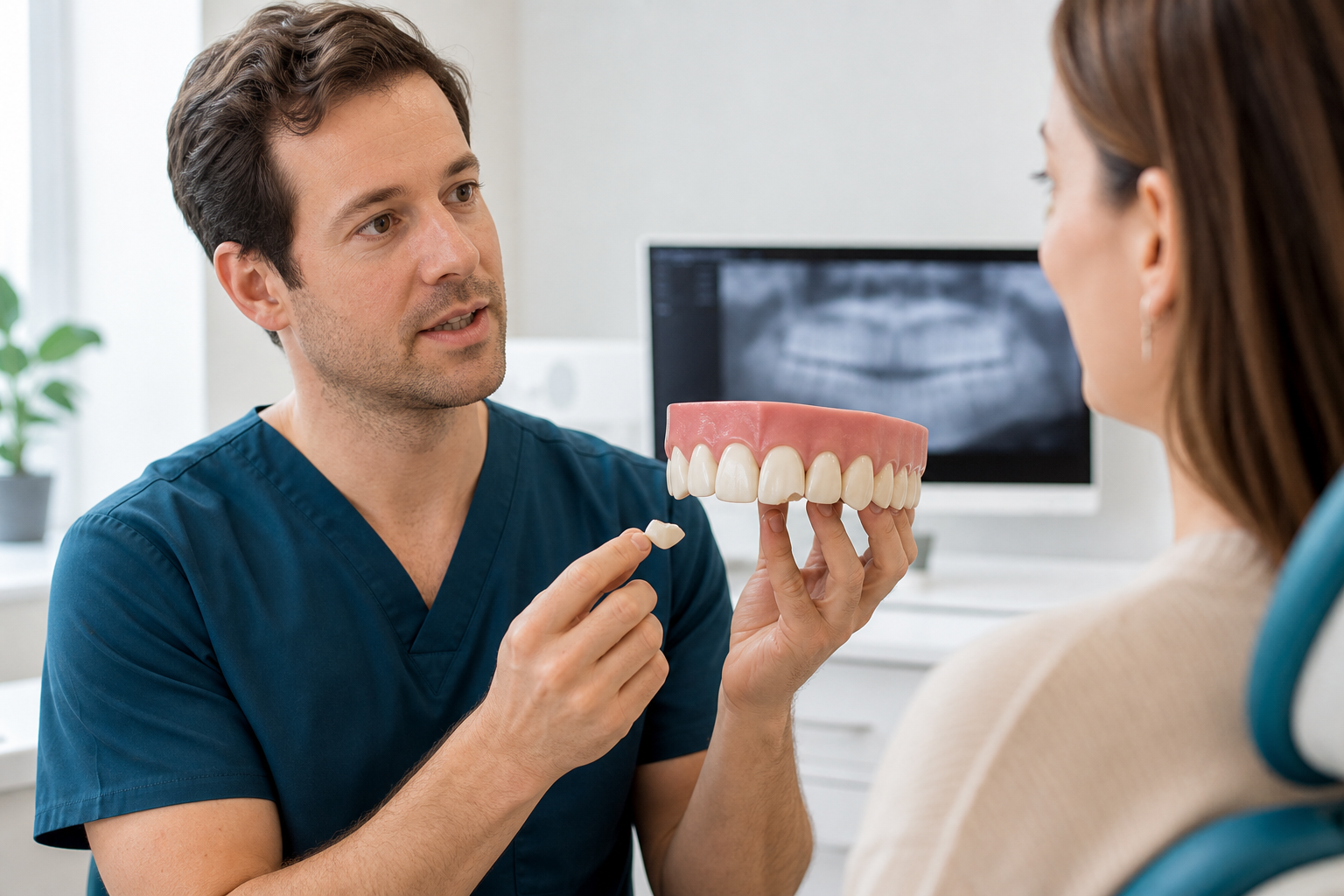
Clinical scope: A broken tooth ranges from a tiny enamel chip to a fracture involving pulp, root or supporting bone. Treatment and urgency depend on depth, symptoms, displacement, contamination and restorability. This guide supports triage but cannot diagnose a fracture remotely.
What counts as a broken tooth?
A broken tooth may have a chipped edge, fractured cusp, lost filling with missing tooth, crown fracture, crown-root fracture, split tooth or root fracture. These injuries look similar to patients but differ greatly in prognosis. The first goal is to identify tissues involved, control pain and protect the tooth from further damage.
When is it an emergency?
Seek urgent care for facial swelling, fever, uncontrolled bleeding, severe trauma, a displaced tooth, exposed red or bleeding pulp, breathing or swallowing difficulty, or pain that cannot be controlled. A minor painless chip can often wait for a prompt appointment, but sharp edges, biting pain and lost fragments still deserve assessment.
What to do immediately
Rinse gently with clean water. Apply pressure with gauze to bleeding tissue and use a cold compress externally for swelling. Retrieve fragments without scraping them and keep them moist in milk or saline if available. Do not use household glue, file the tooth or place aspirin against the gum.
Pain relief before the appointment
Use over-the-counter analgesics only if medically safe and according to the label or professional advice. Avoid very hot, cold or hard foods and chew on the opposite side. Temporary dental material may cover a sharp cavity, but it is not a repair. Antibiotics do not mechanically fix fractures and are not routinely indicated without infection signs.
How the dentist diagnoses the break
Examination includes visual inspection, palpation, mobility, percussion, bite tests, periodontal probing and pulp sensibility. Radiographs assess roots, bone and associated injuries but may miss crack lines. Magnification and transillumination can help. Trauma documentation includes when, where and how the injury occurred and tetanus or medical considerations.
Enamel chip
A small chip limited to enamel may be smoothed, polished or rebuilt with composite if appearance or sensitivity warrants. The dentist checks bite and adjacent teeth because the visible defect may not be the only injury. Repair can be highly conservative. Unnecessary veneer or crown preparation is rarely the first choice for a tiny sound chip.
Enamel–dentine fracture
When dentine is exposed but pulp is not, the tooth may become sensitive and should be sealed promptly. Options include fragment reattachment or direct composite. The remaining fragment, fracture pattern, age and bite influence selection. Current evidence for uncomplicated anterior crown fractures supports several approaches but does not establish one universal best method.
Fragment reattachment
An intact, well-fitting fragment can preserve original colour, texture and anatomy. It is stored moist and evaluated for cracks and contamination. Adhesive reattachment may be reinforced with bevels or grooves depending on the case. The bond can fail under new trauma or load, so follow-up and protective habits remain important.
Direct composite repair
Composite is used when the fragment is absent, damaged or unsuitable. Layering recreates palatal form, dentine opacity, enamel translucency and edge texture. It is repairable and usually requires little preparation. Large incisal reconstructions can chip or stain and may need maintenance, particularly with nail biting, sports or bruxism.
Pulp exposure
A fracture exposing pulp may show a red point and bleeding. Treatment depends on time, contamination, root maturity, symptoms and tissue condition. Vital pulp therapy such as partial pulpotomy can preserve vitality, especially in young permanent teeth. Root-canal treatment is not automatic for every exposure, but delay can reduce options.
Partial pulpotomy
The clinician removes a small amount of inflamed coronal pulp, controls bleeding and places a biocompatible material before sealing the tooth. Systematic evidence supports pulpotomy as a treatment for selected complicated crown fractures. Follow-up tests vitality, root development and apical health. A definitive restoration protects the treated site.
Root-canal treatment
Root treatment may be required when pulp is irreversibly inflamed or necrotic, exposure is unsuitable for vital therapy or symptoms and apical findings dictate. It disinfects and fills the canal but does not repair the external fracture. A core and suitable cuspal or crown protection may still be necessary.
Fractured cusp in a back tooth
A cusp can break around a large filling, often leaving a sharp but relatively painless defect. The dentist assesses whether the fracture ends above the gum and whether cracks continue deeper. Composite, onlay, overlay or crown may restore a restorable tooth. Pulp symptoms and remaining cusp support guide coverage.
Cracked tooth
A crack may produce sharp pain on release of biting pressure and temperature sensitivity. It can extend from the crown toward the root without separating the tooth. Cuspal coverage may reduce flexure, but cannot heal the crack. Pulp status and crack depth influence whether partial coverage, crown, root treatment or extraction is appropriate.
Split tooth
A split tooth has separated segments and often a crack extending through the pulpal floor. Whole-tooth preservation is frequently impossible, though selected multi-rooted teeth may allow removal of one segment and complex reconstruction. Prognosis must be realistic. Repeated bonding of mobile halves is not equivalent to treating a limited crack.
Crown-root fracture
The fracture crosses the gum line and may leave a mobile coronal fragment. Treatment depends on depth, root length, pulp and periodontal attachment. Options can include fragment removal, gingival surgery, orthodontic extrusion, root treatment and restoration, or extraction. A subgingival margin must be accessible and biologically maintainable.
Root fracture
A horizontal root fracture after trauma may involve mobility or displacement. Management can include repositioning and flexible splinting, with monitoring of pulp and healing. Location and displacement affect prognosis. A vertical root fracture, by contrast, commonly makes the tooth or affected root non-restorable. Three-dimensional imaging may assist selected uncertain cases.
Lost filling with broken tooth
A filling can dislodge because of decay, fracture, poor retention or overload. The visible hole may include broken cusp or deep caries. Simply replacing the same filling without diagnosing the cause can repeat failure. Temporary material protects short term; definitive care may range from repair to cuspal coverage or endodontic treatment.
Broken tooth beneath a crown
A crown can detach with core or tooth attached. Do not force it back. The dentist assesses remaining structure, decay, post, root and crown fit. Recementation is suitable only when the tooth and restoration are sound. A fracture below the gum may require extrusion, crown lengthening, new reconstruction or extraction.
Broken root-treated tooth
Root-treated posterior teeth often have substantial tissue loss. A limited cusp fracture may be restorable, while a crack through the root has poor prognosis. Systematic reviews associate cuspal coverage with better outcomes in many cracked root-treated teeth, but the exact restoration depends on structure. A post cannot bind a split root.
Composite bonding
Direct bonding is conservative for many anterior chips and selected posterior defects. It can be repaired and completed in one visit. Isolation, enamel bonding, fracture bevel and bite control affect retention. It may not mask a dark substrate or protect a severely weakened tooth, and colour can change over time.
Veneer
A veneer may restore a larger facial fracture when substantial enamel and palatal structure remain and direct composite is unsuitable. It removes more tissue and is less easily repaired. It should not be used to disguise unresolved pulp injury, deep crack or mobility. Fragment reattachment and composite are considered first where appropriate.
Onlay or overlay
Posterior cusp fractures may be managed with selective or complete cuspal coverage while preserving sound walls. Onlays cover one or more cusps; overlays generally cover all. Adhesive ceramic or composite options require controllable margins and adequate thickness. A fracture extending circumferentially or deeply may instead need a crown.
Crown
A crown covers the prepared tooth and can splint weakened cusps. It may be appropriate for extensive fractures or cracked root-treated teeth. It requires circumferential reduction and does not guarantee a crack will stop. Ferrule, margin location, pulp and periodontal support determine whether crown treatment is responsible.
Extraction and replacement
Extraction may be necessary for vertical root fracture, non-restorable crown-root damage, severe periodontal loss or repeated failure. Implant, bridge, removable replacement or monitored space are separate decisions after healing and risk assessment. Emergency extraction should not automatically commit the patient to a same-day implant.
Sports injuries
After repair, a custom mouthguard can reduce risk in contact and collision sports. Store-bought guards vary in fit and retention. A repaired tooth may need additional space and protection. Trauma can also injure bone and neighbouring teeth, so follow-up is required even when the cosmetic repair looks successful.
Children and immature teeth
Young permanent teeth have large pulps and developing roots. Preserving vitality supports continued root maturation. Treatment priorities and follow-up differ from adults. Fragment storage, early assessment and vital pulp therapy can be particularly important. This general guide does not replace paediatric or trauma-specialist advice.
Why follow-up matters
Pulp necrosis, root resorption, colour change or apical disease may develop after trauma despite a good initial repair. Reviews include clinical tests and radiographs at planned intervals. Sensibility tests can be temporarily unreliable after injury. Patients should attend follow-up even when pain has stopped.
Possible complications
Complications include sensitivity, pulp necrosis, infection, discolouration, repair fracture, debonding, gum inflammation, root resorption and tooth loss. Their likelihood depends on injury type and treatment delay. Aesthetic success at one week is not proof of long-term biological recovery. Consent should separate immediate restoration from ongoing surveillance.
Longevity of repair
No single lifespan applies. Small composite repairs may be polished or added to; reattached fragments can detach; crowns can develop biological or technical problems. Study evidence for traumatic anterior fractures includes limited designs and follow-up. The best forecast uses fracture depth, pulp, bite, patient habits and maintainability.
Aftercare
Follow the advised soft diet after trauma, brush gently with fluoride toothpaste and use any prescribed rinse for the specified period. Avoid biting hard objects with a repaired edge. Report swelling, spontaneous pain, mobility, colour change or renewed biting pain. Use a mouthguard for relevant sport and attend scheduled vitality reviews.
Treatment abroad
For planned reconstruction abroad, bring trauma records and radiographs and allow time for pulp monitoring. Emergency repairs may need later reassessment at home. Obtain exact materials, pulp treatment, splint dates and follow-up instructions. A guarantee on composite or ceramic cannot guarantee pulp survival after injury.
Questions to ask
- Does the fracture involve dentine, pulp or root?
- Can my fragment be reattached?
- Is the pulp likely to stay vital?
- Does the tooth need cuspal coverage?
- What signs require urgent review?
- What follow-up schedule is needed?
Frequently asked questions
Can a broken tooth repair itself?
Enamel and lost tooth structure do not regrow. Pulp and supporting tissues may heal, but the defect needs professional assessment.
Should I keep the broken piece?
Yes. Handle it gently, keep it moist in milk or saline and bring it promptly; reattachment may be possible.
Does every broken tooth need a crown?
No. Minor fractures may need polishing, reattachment or composite, while deeper structural damage may require coverage or extraction.
Sources and clinical review references
- Treatment of uncomplicated anterior crown fractures: systematic review.
- Pulpotomy for complicated crown fractures in permanent teeth.
- Treatment outcomes of cracked teeth.
- Survival of endodontically treated cracked teeth.
Editorial review note: Evidence reviewed 22 July 2026. Named clinician review is required before indexation.