 United Kingdom vs Turkey
 United States vs Turkey
 Germany vs Turkey
 France vs Turkey
 Spain vs Turkey
 Sweden vs Turkey
 Denmark vs Turkey
 Finland vs Turkey
 Ireland vs Turkey
 Netherlands vs Turkey
 Norway vs Turkey
 Australia vs Turkey
All-on-4 Dental Implants in Turkey: Cost, Procedure, Recovery and Patient Guide
All-on-4 is a full-arch treatment in which four implants support a fixed bridge replacing all teeth in one jaw. Suitable patients may receive a temporary fixed bridge soon after surgery, followed by a definitive bridge after the implants and gums have healed.
Award-winning clinics
Treatment only at accredited partner clinics we independently vet and monitor.
Brand-name materials
Straumann, Nobel Biocare, E-max and premium zirconia, documented in writing.
Care after you fly home
Written guarantee plus remote follow-up with your clinical team on WhatsApp.
What is all-on-4 dental implants?
All-on-4 is a treatment concept for replacing a complete upper or lower dental arch with a fixed prosthesis supported by four strategically positioned implants. The rear implants are often angled to make better use of available bone and reduce the need for extensive grafting. The term describes a biomechanical concept, not a single implant brand or one universal protocol.
A safe plan explains the diagnosis, why the method is appropriate, what alternatives exist and what may change after examination. For international patients, an online quote is preliminary until the treating dentist examines the mouth and reviews the required imaging. DentistGuideTurkey provides independent comparison guidance; final diagnosis and consent remain with the treating professional.
Who is a good candidate?
It may be considered for patients who have lost all teeth in one jaw, have a failing dentition that cannot be predictably restored, or struggle with an unstable complete denture. Suitability depends on bone distribution, smile line, lip support, bite, gum condition, medical history, smoking and the patient’s ability to clean under a fixed bridge.
All-on-4 is not automatically the best option for every full-mouth case. Some patients benefit from preserving strategic natural teeth, using more implants, choosing an overdenture or completing staged grafting. Removing restorable teeth solely to fit a standard package can create irreversible harm.
Suitability should include medical history, medicines, allergies, nicotine use, previous treatment, gum health, bite forces and the patient’s ability to maintain the result. Photographs support triage, but X-rays or CBCT may still be required.
What are the main benefits?
- Provides a fixed full-arch solution rather than a conventional removable denture.
- Uses a limited number of implants and may reduce grafting in selected anatomies.
- Can allow a same-day or early temporary bridge when implant stability is adequate.
- Restores a complete dental arch with coordinated control of tooth shape, bite and smile line.
- Offers a defined two-stage pathway for international patients when planning is realistic.
The strongest outcome is not simply the whitest or fastest result. It is a result that preserves appropriate tissue, functions comfortably, can be cleaned and has a realistic maintenance pathway.
How does the procedure work?
- Diagnostic records: photographs, digital scans, panoramic imaging and CBCT are combined with a full medical and periodontal assessment.
- Prosthetic planning: the desired tooth position, lip support, vertical dimension, speech and cleaning access are designed before implant surgery.
- Tooth removal and site preparation: hopeless teeth are extracted and infected tissue is managed; bone may be reshaped when clinically necessary.
- Implant placement: four implants are positioned to create a stable support polygon while avoiding critical anatomy.
- Temporary bridge: when insertion torque and bone quality permit, a fixed provisional bridge is connected and adjusted to reduce excessive load.
- Definitive bridge: after healing, new records are taken and a stronger, more refined final prosthesis is tried in, verified and fitted.
The sequence may change after examination. Gum disease may need stabilisation, infection may need imaging, or temporary work may need to remain longer. International patients should keep enough travel flexibility for checks and adjustments.
Materials, techniques and digital dentistry
Temporary bridges are commonly made from reinforced acrylic or milled polymer. Definitive options may include titanium-reinforced acrylic, high-performance polymer, zirconia or hybrid designs. The best material depends on space, bite forces, repairability, aesthetics and the clinic’s maintenance protocol. A design that looks attractive but cannot be cleaned should be rejected.
Digital scans, photographic records, guided planning and computer-aided manufacturing can improve communication and reproducibility. They do not replace clinical judgement. Patients should ask which stages are digital, who makes the restoration and how fit, aesthetics and bite are verified.
How much does All-on-4 cost in Turkey?
The current DentistGuideTurkey starting point is from £2,390 per arch. This is indicative rather than a diagnosis-based quotation.
The main cost variables are:
- Number of arches treated.
- Extractions and infection management.
- Bone reduction or grafting.
- Implant and multi-unit abutment system.
- Temporary bridge design.
- Final bridge material and reinforcement.
- Sedation, hotel and transfers.
A transparent quote separates essential care from optional upgrades and states whether imaging, temporary work, medication, laboratory changes, hotel, transfers and follow-up are included.
Get a fixed all-on-4 quote in 48 hours
Send photos of your teeth on WhatsApp and receive a free, no-obligation offer within 48 hours.
Get an Offer on WhatsAppHow long should an international patient stay?
The typical pathway is commonly two treatment stages, with the first surgical visit followed by a healing period and a second visit for the definitive bridge. Stay length should reflect the number of stages, laboratory production, try-ins and post-treatment review. Same-day techniques are useful in selected cases, but speed should not remove necessary diagnostic, healing or verification steps.
Recovery and aftercare
The first week usually involves swelling, bruising, dietary restriction and adaptation to a temporary bridge. A soft diet is essential because the implants are healing even when the teeth feel fixed. Speech and chewing improve as swelling reduces and the bite is refined. Hygiene under the bridge must be taught with appropriate brushes, floss threaders or an irrigator.
Written instructions should explain diet, cleaning, medicines, normal symptoms, warning signs and who to contact. Long-term maintenance normally includes daily plaque control, professional examinations and management of grinding or smoking. Guarantee conditions should be supplied before payment.
Risks, limitations and possible complications
Risks include implant failure, infection, fracture or loosening of the provisional bridge, speech changes, food trapping, inadequate lip support, hygiene difficulty, uneven bite loading and aesthetic dissatisfaction. Because a full arch functions as one system, a prosthetic or biological complication can affect the entire restoration.
No responsible page should promise risk-free treatment, no discomfort for every patient or automatic lifetime survival. Consent should cover common risks, important uncommon risks and the plan if a problem occurs after the patient returns home.
Prefer to fill in a quick form?
Fill in our short consultation form and our patient team will prepare your personalised offer.
Get an Offer via Our FormHow does it compare with alternatives?
All-on-4 uses four implants per arch; All-on-6 uses six where anatomy and prosthetic design justify additional support. A removable implant overdenture may be easier to clean and less expensive, while a fixed bridge feels more like natural teeth. The decision should be prosthetically driven rather than selected from price alone.
Compare options by tissue preservation, need for surgery, treatment time, hygiene, repairability and future maintenance, not only the initial package price.
Why do patients travel to Turkey?
Turkey offers multilingual care, modern clinics and efficient laboratories. Lower operating costs can reduce prices, but price alone does not establish quality. Verify the clinic’s legal identity, treating dentist, professional registration, imaging standards, material documentation, emergency pathway and aftercare responsibilities.
The practical draw is scheduling: a course of treatment that would be spread over many months at home is planned as one or two trips, with the laboratory in the same building as the clinic. That is also why the written plan matters more here than it would at home. You are agreeing to the whole course of treatment before you fly.
Questions to ask before booking
- Who is the treating dentist, and what is their relevant experience?
- What diagnosis supports every item in the plan?
- Is there a more conservative or non-surgical alternative?
- Which brand and material will be documented?
- What may change after examination?
- How many appointments and try-ins are included?
- Who manages complications after I return home?
- What does the written guarantee cover and exclude?
Ask for the implant certificate, every time
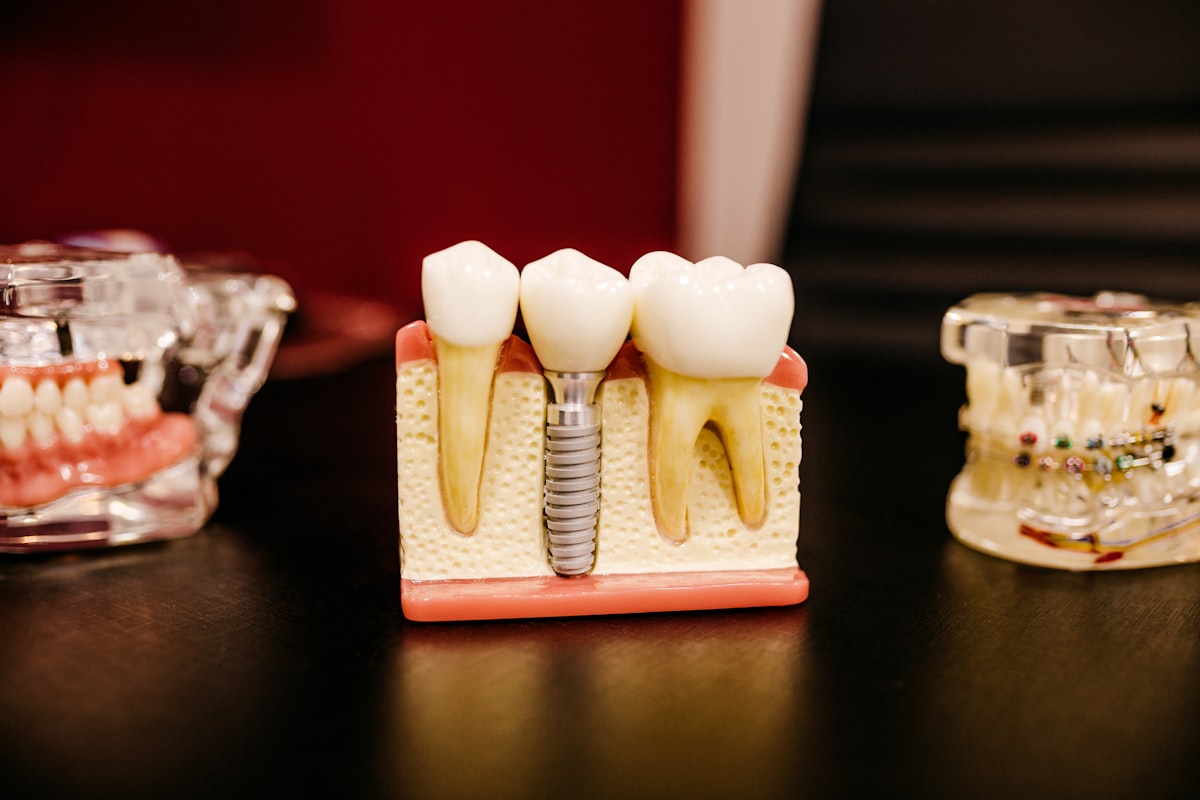
The implant is the one part of the treatment you never see again once the gum closes over it. From the outside, a premium fixture and an unbranded copy look identical — the crown on top tells you nothing, and neither will your dentist at home. The certificate is what makes the part in your jaw knowable.
Why the certificate matters
The implant certificate — often issued as an implant passport — is the document that ties the fixture in your jaw to a manufacturer, a specific product reference and a production batch. Two things follow from it. It is what puts you inside the manufacturer's guarantee rather than outside it. And it is what lets any dentist, anywhere, order the abutment or screw that actually fits, years later, without opening your mouth to guess. A dentist who cannot identify a component will usually — and reasonably — advise replacing the whole restoration rather than repairing it. That is an expensive way to find out the paperwork was missing.
The risk it protects you against
A written quote can name a well-known brand while a cheaper fixture is placed on the day. It is invisible at the time, invisible on the X-ray to an untrained eye, and it is the single substitution a patient has no way of catching without documentation. A certificate issued in your name, carrying the brand, reference and batch, is the check that makes that substitution detectable. Ask for the brand in writing before you accept a plan, and ask for the certificate itself before you fly home.
What a real implant certificate shows
- Manufacturer and implant system : the company and the specific line, not just "titanium implant".
- Product reference code : the catalogue number of the fixture that was actually placed.
- Batch or lot number : traceable back to the production run, which is the part a copy cannot fake.
- Diameter and length : the dimensions that decide which abutment and screw fit later.
- Tooth position and date of placement : which implant is where, and when.
- Your name and the treating clinic : a certificate with no patient named on it certifies nothing.
- Guarantee terms : what the manufacturer covers, what the clinic covers, and what voids either.
Implant packaging carries a peel-off sterile label printed with the reference and batch number. A clinic working properly peels that label onto your record while you are in the chair — you can ask to see it done. If a clinic will not name the brand in the written plan before surgery, or hands you nothing afterwards, that is the point to stop. The price is not the problem in that situation; the traceability is.
What to do with it once you are home
Keep the certificate with the rest of your treatment file — the written plan, the prosthetic material specification, the post-operative radiographs and the guarantee terms — and give your own dentist a copy at your first check-up. Documented work is maintainable in any country. Undocumented work is not, and no guarantee can rescue a fixture nobody can identify.
Every clinic we refer to issues an implant certificate as standard, in the patient's name, with the brand and batch recorded. It is on the list of documents we check you are leaving with.
Frequently asked questions about all-on-4
Can All-on-4 be completed in one day?
Surgery and a fixed temporary bridge may be completed in one day for selected patients. The definitive bridge is normally fitted after healing, so the full treatment is not literally finished in one day.
Do all remaining teeth have to be removed?
No. Teeth should only be removed when they are non-restorable or compromise the overall plan. A responsible clinician assesses whether any teeth can be predictably preserved.
Can I eat normally after surgery?
A soft diet is normally required during early healing. Biting hard foods too soon can overload implants or fracture the temporary bridge.
Is All-on-4 removable?
The bridge is fixed by the dentist and is not removed by the patient. It still requires daily cleaning underneath.
What happens if one implant fails?
Management depends on timing, implant position and bridge design. Options may include replacing the implant, modifying the temporary restoration or allowing additional healing.
How many days should I stay in Istanbul?
The surgical visit often requires several nights for surgery, temporary bridge fitting and bite checks. The final visit is usually longer because the definitive bridge may require multiple try-ins.
Key takeaway
All-on-4 is a full-arch treatment in which four implants support a fixed bridge replacing all teeth in one jaw. Suitable patients may receive a temporary fixed bridge soon after surgery, followed by a definitive bridge after the implants and gums have healed. The correct plan is individual. Use online information to prepare questions, then rely on examination and appropriate imaging for the final clinical decision.
Read further before you decide
If you want the clinical detail behind All-on-4 rather than the commercial summary:
Related reading
Medical sources used for this page
- American Dental Association, MouthHealthy: Implants
- NHS: Dental treatments
- American Academy of Periodontology: Dental implant and periodontal patient information
Patient information only. This page does not replace examination, diagnosis or treatment by a qualified dental professional.