 United Kingdom vs Turkey
 United States vs Turkey
 Germany vs Turkey
 France vs Turkey
 Spain vs Turkey
 Sweden vs Turkey
 Denmark vs Turkey
 Finland vs Turkey
 Ireland vs Turkey
 Netherlands vs Turkey
 Norway vs Turkey
 Australia vs Turkey
Why Turkey? Why Millions of Patients Choose Turkish Dentistry Every Year
Every year, around one and a half million people board a plane with the same unusual itinerary: fly to Turkey, walk into a dental clinic, and fly home with a new smile. They come from London and Manchester, from New York and Sydney, from Berlin, Paris, Stockholm and Copenhagen. They are teachers, builders, retirees, executives: people who in most cases spent years avoiding a treatment plan they could not afford at home. This article explains, honestly and in detail, why this movement exists, why it keeps growing, and what separates the patients who come home delighted from the small minority who do not.
The numbers behind the phenomenon
Dental tourism is not a fringe trend; it is one of the largest patient migrations in modern healthcare, and Turkey sits unambiguously at its centre. Industry and ministry estimates put the number of international patients receiving dental treatment in Turkey at roughly 1.5 million per year. More than Hungary, Mexico and Thailand, the other major destinations, and the flow keeps accelerating as word of mouth compounds. Istanbul alone hosts hundreds of clinics built specifically around the international patient: multilingual coordinators, airport transfer fleets, partner hotels, and laboratories that run around the clock.
What makes the statistic remarkable is who these patients are. This is not primarily a budget-traveller phenomenon. The typical patient is a middle-aged adult from a wealthy country with a failing dentition or a long-postponed cosmetic wish, who has already collected quotes at home and found them impossible: £20,000 for full-mouth implants in Britain, $45,000 in America, 250,000 kronor in Sweden. For that patient, Turkey is not the cheap option. It is the only realistic option that does not involve dentures or debt.
Reason one: the economics are structural, not suspicious
The first question every sceptical patient asks is the right one: if the same implant costs £450 in Istanbul and £2,500 in London, what corner is being cut? The honest answer is: none that involves your mouth. The difference is the cost base underneath the dentistry.
A London practice pays London rent, London salaries for every nurse and receptionist, London laboratory invoices, and some of the highest professional indemnity premiums in Europe. Before the dentist has picked up a handpiece. Dentistry is an overhead-intensive business: most of what you pay for a crown is not the crown. In Istanbul, every one of those cost lines is a fraction of its Western equivalent, while the materials themselves (Straumann and Nobel Biocare implants, E-max and zirconia ceramics) come from the same Swiss, Swedish and Liechtenstein factories at broadly similar wholesale prices. Add scale (a high-volume clinic negotiates directly with manufacturers) and fierce local competition (dozens of accredited clinics competing openly on published prices for the same international patients), and a 60–70% price gap emerges with no quality sacrifice required to explain it.
This is why the price difference has persisted for two decades and through every currency cycle. It is not a promotion. It is geography.
Reason two: volume creates expertise you cannot buy elsewhere
Here is the counterintuitive part that surprises most first-time patients: for certain procedures, the average Istanbul specialist is more practised than the average Western one, not despite the price, but because of the volume the price attracts.
A UK dentist in general practice might place a few dozen implants a year; many place none at all and refer out. A surgeon at a high-volume Istanbul implant centre places more than that in a fortnight, week after week, year after year. Full-arch protocols like All-on-4, a once-a-month event in most European practices, happen daily in Istanbul's larger clinics, with dedicated teams that do nothing else. In surgery, repetition is not a marketing point; it is the single strongest predictor of smooth operations, low complication rates and calm handling of anatomical surprises. The world's deepest bench of full-arch experience is not in Zurich or Beverly Hills. It is on the Bosphorus, and it was built by the very patient flow this article describes.
Reason three: technology and the in-house laboratory
Because Istanbul's international clinics compete globally, they invest like it. Cone-beam CT scanners, intraoral scanners, computer-guided surgical planning, on-site milling units and 3D printers are standard equipment at the accredited tier, in many cases newer than what patients see at home, simply because the clinics are newer and the volume justifies the machines.
The single biggest structural advantage is the in-house laboratory. In Britain or Germany, your crown is designed in the clinic, posted to an external lab, and returned two weeks later; every adjustment repeats the cycle. In Istanbul, the technician works one floor up. A veneer that needs a fraction more translucency is remade overnight; a bridge framework is tried in, adjusted and finished within days. This is the honest mechanism behind the famous one-week treatment timeline. The compression comes from logistics, not from rushing biology. Whatever requires healing time still gets it: implant cases are completed over two visits months apart, exactly as the textbooks require.
Reason four: weeks, not months
Ask a British patient what finally pushed them onto the plane and you will hear about money, but ask what surprised them most, and you will hear about time. A smile makeover that consumes four months of scattered appointments at home is completed in five to seven days in Istanbul. Diagnosis, design, preparation, try-in and fitting happen on consecutive days instead of consecutive months, because the specialist, the lab and the imaging are in one building and your calendar is the priority around which the week is built.
For patients in publicly funded systems, the comparison is starker still. NHS waiting lists for non-urgent dental work stretch beyond a year in parts of Britain; Finnish and Swedish patients queue months for prosthetic assessments. The Istanbul alternative begins with a WhatsApp message and a written plan within 48 hours.
Reason five: the package model and Turkish hospitality
Somewhere along the way, Turkish clinics understood something their Western counterparts never needed to learn: an international patient is not just buying dentistry. They are managing a journey. So the clinics built the journey into the product. A typical package includes the treatment itself, the hotel (usually four or five stars, near the clinic), VIP transfers between airport, hotel and appointments, a personal coordinator on WhatsApp, and structured aftercare that continues after you fly home.
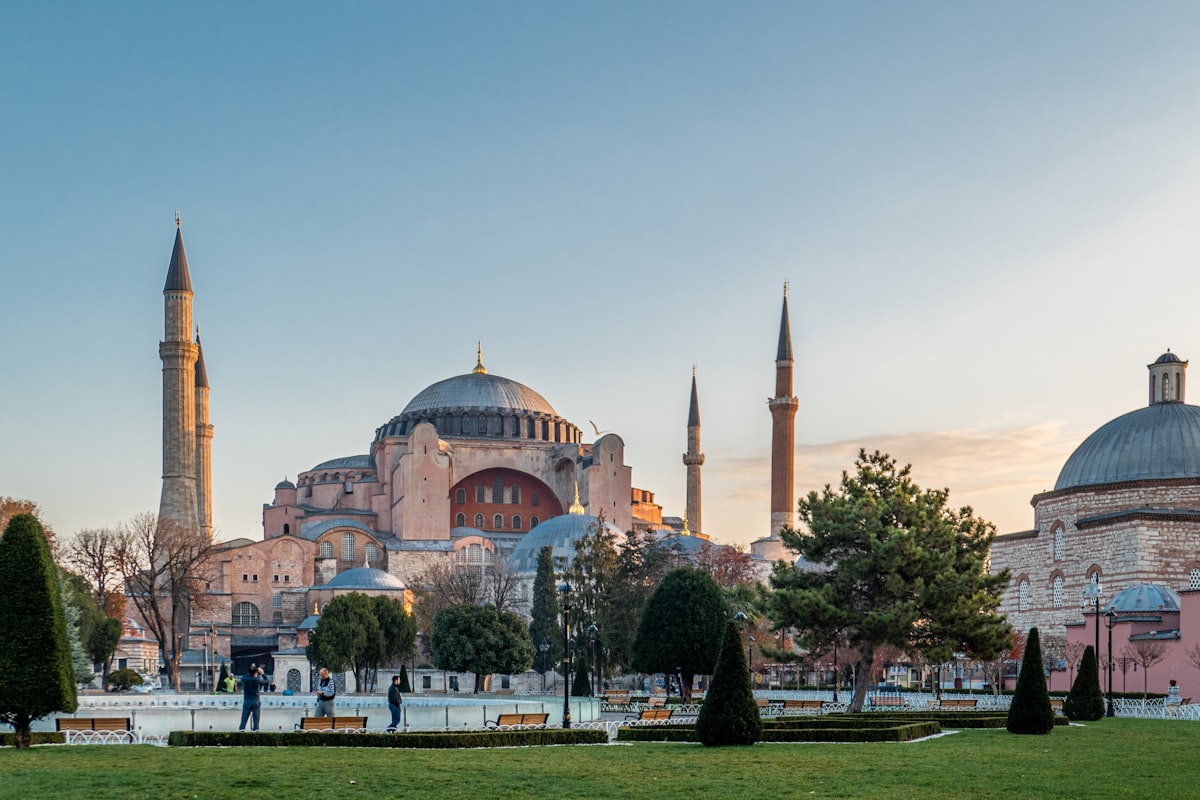
Layer onto that the cultural fact that Turkey takes hospitality personally (misafirperverlik is a national trait, not a corporate value) and the experience routinely outclasses what patients expect of a medical trip. Between appointments there is one of the world's great cities: the Hagia Sophia, the Grand Bazaar, dinner on the Bosphorus. Many patients describe the week as the strangest and best holiday they have taken. It is a genuinely different model of care, and once experienced, it converts sceptics into the word-of-mouth engine that keeps the whole phenomenon growing.
Reason six: materials, accreditation and written guarantees
The accredited tier of Turkish dentistry runs on exactly the brands a cautious patient would demand at home: Straumann, Nobel Biocare and MIS implant systems with published multi-decade survival data; Ivoclar's E-max ceramics; premium multi-layer zirconia. Clinics document brand and batch for every unit placed, issue implant passports any dentist worldwide can read, and back the work with written guarantees, up to lifetime on implant fixtures, whose terms you receive before you commit, not after.
Regulation is real, too: the Turkish Ministry of Health licenses and inspects clinics, and the international segment adds voluntary accreditations and ISO sterilisation certification because their business depends on surviving the scrutiny of foreign patients and their home dentists. None of this makes every clinic in Turkey good. It makes the good ones verifiable, which is what matters to you.
What it looks like from each country
From the UK: the largest patient group of all. NHS dentistry excludes implants and cosmetics; private prices are among Europe's highest; and Istanbul is a four-hour direct flight from a dozen British airports. For a Briton facing a £12,000 arch or £8,000 of veneers, Turkey at a third of the price with the same materials is simply arithmetic. From the USA: the fastest-growing group. American prices are the world's highest and insurance caps make them academic; even with an eleven-hour flight, full-mouth patients keep five-figure savings and fold the trip into a European holiday. From Germany, France and the Nordics: patients accustomed to strong public systems discover those systems stop precisely at implants and aesthetics; Turkey undercuts the old Hungarian and Polish corridors on like-for-like brands, three and a half hours from most capitals. From Australia: the longest journey and still a growing flow. Australian dental prices rival American ones, and Australians already fly long-haul for everything; a A$30,000 quote at home against roughly A$10,000 in Istanbul funds the flights many times over, which is why Turkish clinics increasingly host patients from Sydney, Melbourne and Perth alongside Europeans.
The honest section: what can go wrong
A fair account has to include the failures, because they exist and they are instructive. The phrase "Turkey teeth" earned its notoriety from a specific, avoidable pattern: patients (often young, often chasing the whitest possible smile at the lowest possible price) who booked cut-price clinics that filed healthy teeth to pegs for aggressive crown work that should never have been prescribed. The lesson of every such story is the same: the failure was the clinic selection, not the country. Britain has negligent dentists too; nobody concludes British dentistry is unsafe.
The real risks worth planning against are: choosing on price alone (below a certain number, something must give. Brands, imaging, sterilisation or honesty); clinics that quote without imaging; over-treatment (crowns where veneers would do, veneers where whitening would do); and inadequate aftercare planning for when you are back home. Every one of these risks is filtered out by the same discipline: verify accreditation, demand named materials and written guarantees, insist on CT-based planning for surgical work, read reviews with history, and prefer clinics that sometimes tell patients no. That filtering is precisely the job this site exists to do.
How to do it right
The successful patient journey follows a pattern so consistent it can be written as instructions. Start with photographs, not flights: send clear photos of your teeth on WhatsApp and let a clinician assess remotely. You will have a written, itemised, fixed plan within 48 hours, and an honest clinic will sometimes tell you that you need less than you feared. Compare that plan against a home quote line by line: same implant brand, same ceramic, same number of units. Check the guarantee terms in writing. Book flexible flights only after the plan is agreed. In Istanbul, expect a first day of examination and 3D imaging that confirms (or honestly revises) the remote plan before anything irreversible happens. And when you are home, keep the routine: your local check-ups continue as normal, your Istanbul team stays a WhatsApp message away, and the written records travel with you.
Do that, and you become what 1.5 million people a year already are: a patient who got world-class dentistry, a week in one of the world's great cities, and a bill that made both possible.
How Turkey became the world's dental clinic
None of this happened by accident. Turkey's rise began in the early 2000s, when the government designated health tourism a strategic industry, with investment incentives for private hospitals and clinics, streamlined licensing for internationally oriented facilities, and later, direct marketing support through the national tourism apparatus. Turkish Airlines, flying to more countries than any carrier on earth, quietly became the industry's circulatory system: nearly every major European city gained a direct, affordable route to Istanbul. At the same time, Turkey's dental faculties (among the oldest in the region, with Istanbul University's roots reaching back to 1908) were graduating thousands of dentists a year into a market that rewarded specialisation and scale.
The result, two decades on, is an ecosystem rather than a collection of clinics: purpose-built dental hospitals with a dozen surgeries running in parallel, laboratory campuses that serve them around the clock, hotel partnerships refined over thousands of patient stays, and a workforce, from surgeons to drivers, for whom the international patient is the core business, not an occasional novelty. Competitors exist: Hungary built an earlier version of this model for German and Austrian patients, Mexico serves American border states, Thailand serves Australasia. But none combines Turkey's volume, price point, flight connectivity and full-package infrastructure, which is why the patient flows keep consolidating toward Istanbul and Antalya.
What the week actually feels like
Strip away the marketing and a treatment week in Istanbul runs to a rhythm patients describe as strangely calm. Day one is the longest: a driver meets you at the airport gate, the hotel is ten minutes from the clinic, and the afternoon belongs to examination, 3D imaging and a sit-down conversation where the remote plan is confirmed against reality. This is the moment an honest clinic revises a plan downward if your teeth turn out healthier than the photos suggested. Days two and three carry the main clinical work in two- to four-hour sessions, always with a coordinator translating anything the English-speaking clinician has not already covered. The middle of the week belongs to the laboratory, and to you: this is when patients discover the Grand Bazaar, take the ferry to the Asian side, or simply sleep. The final days are for try-ins, adjustments, the definitive fitting and a review appointment where aftercare is walked through line by line and the guarantee documents are signed. Then the same driver takes you back to the airport. Total clinical hours across the week: usually eight to fourteen. Total queueing: none.
And when you are back home?
The question every thoughtful patient asks before booking is not about the week in Istanbul. It is about year two, and year five. The answer has three parts. First, documentation: accredited clinics send you home with complete digital records, X-rays and implant passports, so any dentist in Manchester or Melbourne can maintain the work without guesswork. Second, remote continuity: the WhatsApp line to your clinical team does not close when you fly; photographs answer most questions within hours, and an annual remote review costs nothing. Third, the guarantee: written terms covering the work itself, honoured by clinics whose entire business model collapses if they develop a reputation for abandoning patients, international reputation being, in the end, the only marketing that matters in this industry. Routine hygiene and check-ups stay local, exactly as they should; the Istanbul clinic remains your specialist bench for anything touching the treatment itself.
Curious what your own plan would look like?
Send photos of your teeth on WhatsApp and receive a free, no-obligation offer within 48 hours.
Get an Offer on WhatsAppQuick questions, quick answers
Is it really 1.5 million patients a year?
Turkish health-tourism bodies and ministry figures consistently estimate international dental patients at around 1.2–1.5 million annually, making Turkey the world's highest-volume destination for dental travel.
Why is Turkey cheaper if the materials are the same?
Salaries, rent, laboratory work and insurance, the bulk of any dental bill, cost a fraction of Western levels in Turkey, while high-volume clinics buy the same brand-name materials directly at scale. The gap is structural economics, not quality.
Which countries do patients come from?
The UK is the largest group, followed by Germany, France, the Netherlands, the Nordics, Ireland, the USA and a fast-growing Australian contingent. Most travel for implant-based reconstruction or cosmetic smile work, the treatments with the largest absolute savings.
What about the "Turkey teeth" horror stories?
They are real and they trace to a specific pattern: bargain clinics and aggressive over-crowning. They are avoided the same way bad dentistry is avoided anywhere, by verifying accreditation, materials, imaging standards and guarantees before booking. That vetting is what this guide does.
How do I start?
Send photos of your teeth on WhatsApp (+90 553 543 5342) or use the consultation form below. A fixed, itemised plan comes back within 48 hours: free, in English, with no obligation.
Prefer a quick form? Get your free plan without picking up the phone
Fill in our short consultation form and our patient team will prepare your personalised offer.
Get an Offer via Our Form