
 United Kingdom vs Turkey
 United States vs Turkey
 Germany vs Turkey
 France vs Turkey
 Spain vs Turkey
 Sweden vs Turkey
 Denmark vs Turkey
 Finland vs Turkey
 Ireland vs Turkey
 Netherlands vs Turkey
 Norway vs Turkey
 Australia vs Turkey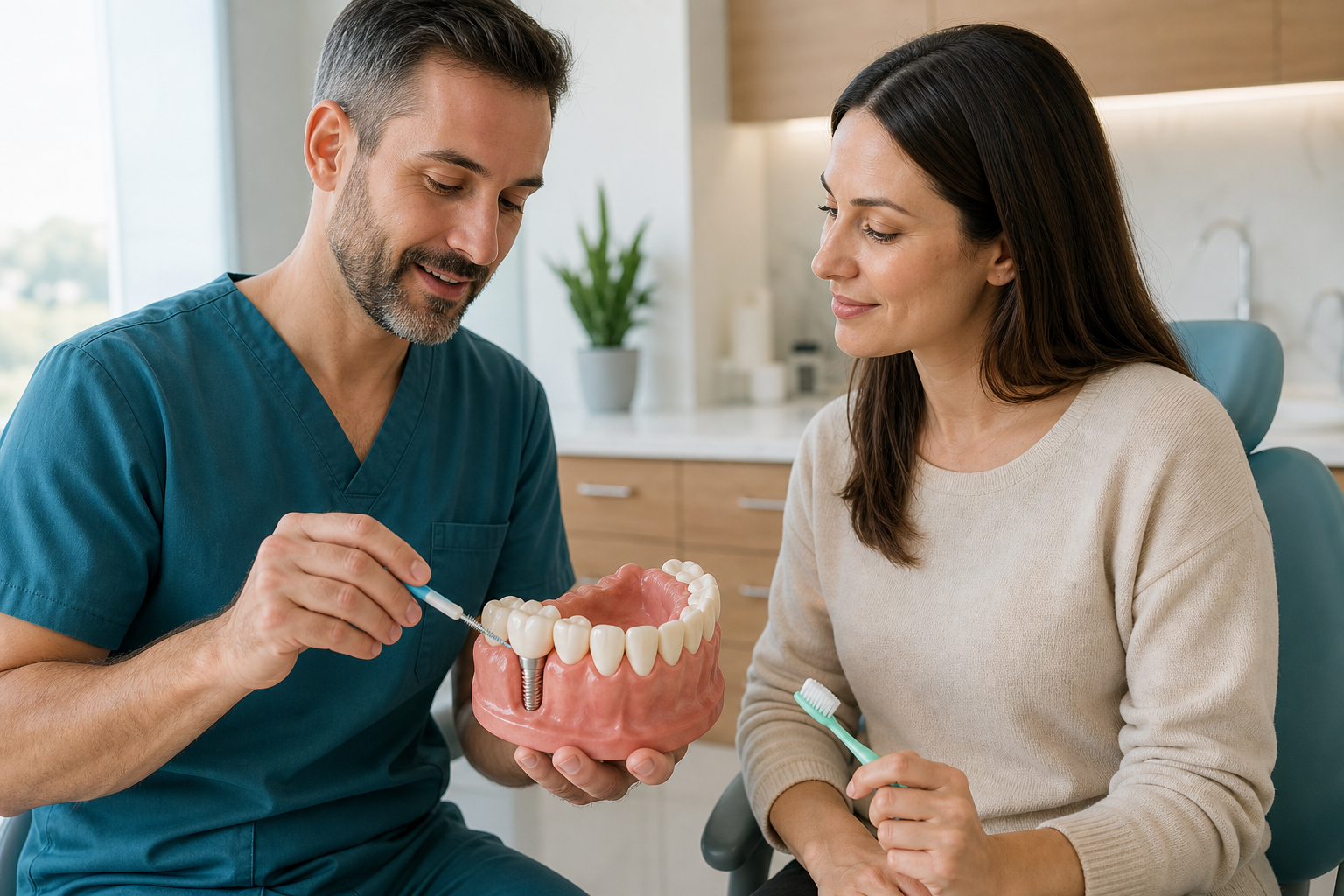
Clinical review required: Follow the written instructions from the treating surgeon. Implant placement, immediate loading, grafting and sinus surgery have different recovery limits.
What is implant aftercare?
Implant aftercare covers surgical healing, protection of the blood clot and soft tissue, medicines, cleaning, diet, temporary restorations and lifelong peri-implant maintenance. The implant can look stable while bone integration is still developing. Comfort is not permission to overload it, and pain alone cannot confirm success.
The first hour
Keep gauze pressure as directed and avoid repeatedly checking the wound. A small amount of blood mixed with saliva can look dramatic. Do not rinse vigorously, spit forcefully, smoke or disturb the site. If local anaesthetic remains active, protect the lip, cheek and tongue and avoid hot food.
Bleeding
Light oozing on the day of surgery is common. Sit upright and apply firm continuous pressure with clean gauze for the interval advised. Releasing pressure every few minutes prevents clot formation. Persistent heavy bleeding, large clots, dizziness or blood that fills the mouth needs urgent contact. Patients taking anticoagulants should follow the coordinated plan and never stop medicine independently.
Swelling and bruising
Swelling often increases over the first two or three days before settling. Cold packs used intermittently through cloth may help early comfort if the surgeon recommends them. Bruising can spread with gravity. Swelling that worsens after initial improvement, becomes hard with fever, affects the eye or neck, or interferes with swallowing or breathing requires urgent assessment.
Pain control
Take the recommended analgesic before numbness fully wears off when safe for you. Dose limits, stomach disease, kidney disease, liver disease, pregnancy, anticoagulants and other medicines matter. Do not combine products containing the same ingredient. Opioids, when prescribed, impair driving and can interact with alcohol or sedatives. Escalating pain deserves diagnosis rather than repeated dosing.
Antibiotics
Antibiotic policies differ with procedure and patient risk. Evidence does not support treating every healthy implant patient with prolonged routine antibiotics. If prescribed, follow the exact course and report rash, breathing difficulty or severe diarrhoea. Antibiotics do not replace drainage, cleaning or review of a mechanical complication.
Eating and drinking
Begin with cool or lukewarm soft foods and adequate fluids. Chew away from the site and avoid hard particles that can enter the wound. Very hot food, alcohol and vigorous sucking can disrupt early healing. Nutrition should include protein and varied foods rather than a prolonged sugary liquid diet. Instructions may be stricter after grafting or immediate loading.
Oral hygiene
Keep the rest of the mouth clean. The surgical site may need gentle brushing with an ultrasoft brush after the interval specified. Do not scrub sutures. Salt-water or chlorhexidine rinses are used only under the clinician's protocol; chlorhexidine can stain, alter taste and is not a substitute for mechanical cleaning. Water irrigators are usually delayed until tissues are stable.
Smoking and nicotine
Smoking and nicotine exposure can impair wound healing and increase implant complications. The safest plan is cessation before and after surgery, with support arranged in advance. Vaping is not a proven safe alternative for a fresh surgical site. If abstinence is difficult, tell the team honestly so risk and cessation support can be addressed.
Exercise, work and sleep
Rest on the day of surgery and avoid strenuous activity while bleeding risk is increased. Elevating the head may reduce throbbing. Return to work depends on surgery, sedation, swelling and job demands. After sedation, driving and important decisions remain restricted for the period stated by the provider.
Sutures
Dissolving sutures can loosen as swelling falls; non-resorbable sutures require removal. Do not pull a loose end. Contact the clinic if a wound opens widely, graft material is exposed, or a membrane becomes visible. Tiny particles after grafting can sometimes appear, but significant loss or persistent drainage needs review.
Temporary teeth and immediate loading
An immediate provisional is designed for appearance and controlled function, not unrestricted biting. Follow the soft-diet and contact instructions. Movement, clicking, fracture or a changing bite requires prompt review because micromotion can jeopardise healing or damage components. Do not glue a temporary restoration yourself.
Healing abutments and cover screws
A healing abutment may feel unfamiliar and can trap plaque. Clean around it as directed without forcing tools under healing tissue. If it loosens or falls out, keep it safely and call the clinic; the opening can narrow. A submerged implant is covered by gum and should not be probed by the patient.
Normal versus concerning symptoms
- Expected: mild oozing, swelling, bruising, tenderness and temporary restricted opening.
- Review soon: persistent bad taste, pus, increasing redness, loose restoration or pain on biting.
- Urgent: uncontrolled bleeding, rapidly spreading swelling, breathing or swallowing difficulty, severe allergic symptoms or loss of consciousness.
Osseointegration and loading
Bone integration cannot be judged by appearance alone. Timing depends on bone quality, implant stability, grafting, site and prosthetic design. The clinician may use examination, radiographs or stability measurements. Loading earlier or later is a planned decision; extending healing indefinitely does not compensate for infection or instability.
Long-term cleaning
Brush twice daily and clean around implant crowns, bridges or full arches with aids matched to access: interdental brushes, floss threaders, specialised floss or irrigation. The best tool is one that cleans without damaging tissue and is used consistently. Full-arch designs must provide enough space for hygiene; a beautiful but uncleanable prosthesis is a maintenance problem.
Professional maintenance
Recall interval is based on periodontal history, smoking, diabetes, plaque control, prosthesis design and previous peri-implant disease. Reviews include bleeding or suppuration, probing, recession, mobility, occlusion and radiographs when indicated. Implant crowns do not decay, but adjacent teeth do, and peri-implant tissues can become inflamed.
Peri-implant mucositis and peri-implantitis
Bleeding and inflammation without progressive bone loss describe mucositis and may be reversible with effective plaque control and professional care. Peri-implantitis includes inflammatory bone loss and is harder to treat. Waiting for pain is unsafe because disease may be quiet. Early bleeding, pus or deepening pockets need assessment.
Full-arch prostheses
Fixed full-arch bridges require daily cleaning underneath and periodic review of screws, acrylic or ceramic, bite and tissue. Evidence does not define one removal interval for everyone. Removal should be risk- and design-led because repeated disassembly also has costs. The patient needs access to compatible components and a repair plan.
Treatment abroad
Obtain implant brand, size, position, component system, graft record, torque or stability information and radiographs. Clarify who manages a loose provisional, infection or component fracture at home. Do not schedule a flight so soon that early review is impossible. A lifetime warranty does not replace local clinical access.
Sinus and graft precautions
After upper posterior grafting or sinus elevation, the surgeon may restrict nose blowing, forceful sneezing, straws, flying or pressure changes for a defined period. Sneeze with the mouth open if instructed. New fluid passage between mouth and nose, persistent one-sided nasal discharge, fever or worsening sinus pain needs prompt review. These restrictions do not apply identically to every implant.
Diabetes and healing
Diabetes does not automatically exclude implants, but glycaemic control affects infection and healing risk. Continue monitoring and medicines according to the medical plan, maintain nutrition and report poor intake or abnormal glucose. Elective surgery may need coordination when control is unstable. Long-term reviews remain important because risk can change after successful integration.
Loose implant versus loose crown
Movement may come from a prosthetic screw, cemented crown or the implant itself. Stop chewing on the area and seek prompt examination rather than repeatedly testing it. A loose screw may be repairable; true implant mobility can indicate failed integration or bone loss. Delay can damage internal connections or surrounding tissue.
Baseline records
After restoration, a baseline clinical examination and appropriately timed radiograph help future comparison. Probing depths, tissue levels, restoration design and hygiene access should be recorded. A later image means little without the initial bone level and angulation. Retain copies when treatment and maintenance occur in different countries.
Questions to ask
- Which cleaning method should I start, and when?
- What diet and loading limits apply?
- Which medicines and dose limits are safe for me?
- When are sutures and the provisional reviewed?
- What symptoms require same-day contact?
- What implant system and components were used?
- What is my maintenance interval?
Frequently asked questions
When can I brush the implant site?
Follow the surgeon's site-specific timing. The rest of the mouth should remain clean from the start.
Is some swelling normal?
Yes, swelling often peaks after one to three days. Worsening after improvement or airway symptoms are not normal.
Can an implant fail without pain?
Yes. Mobility, bone loss or inflammation may occur with limited pain, which is why reviews matter.
Do implants need lifelong cleaning?
Yes. Plaque control and supportive care remain essential even though titanium cannot decay.
Sources and clinical review references
- Consensus on peri-implant diagnosis, treatment and maintenance.
- Oral self-care for peri-implant health: systematic review.
- Supportive care for full-arch implant prostheses: systematic review.
- Chlorhexidine after periodontal or implant surgery: systematic review.
Editorial review note: Evidence reviewed 22 July 2026. Named clinician review is required before indexation.