Bruxism Treatment in Turkey: Cost, Procedure & Complete 2026 Guide
Bruxism — grinding and clenching — quietly flattens enamel, cracks fillings and destroys ceramics. Treatment combines a custom night guard, bite optimisation and follow-up. If you are investing in veneers or implants, managing bruxism is not optional; it is what protects the investment.
Vetted, accredited clinics
Treatment only at partner clinics we independently screen — led by our 2025 award winner, IdealCare Dental.
Documented materials
Brand-name implants and ceramics with batch documentation, stated in writing before you commit.
Aftercare beyond the flight
Written guarantees plus a direct WhatsApp line to your clinical team after you return home.
Understanding bruxism treatment: the full picture
Functional dentistry looks past individual teeth to the system they belong to: the jaw joints, the chewing muscles and the precise choreography of how upper and lower teeth meet thousands of times a day. When that system is balanced, you never think about it. When it is not — through grinding, clenching, a collapsed bite or joint dysfunction — the symptoms radiate: worn and chipped teeth, morning jaw ache, tension headaches, clicking joints, ceramics that keep fracturing. Bruxism Treatment addresses the system, not just the symptom.
This is also the quiet discipline behind every good cosmetic and implant result. A full set of veneers placed onto an unbalanced bite is a set of veneers scheduled to chip; an implant bridge built without occlusal analysis is a bridge loaded unevenly from day one. The best Istanbul clinics integrate functional assessment into their major treatment plans as standard — digital bite scanning, joint examination and muscle palpation before the aesthetic design is finalised.
As a standalone treatment, bruxism treatment in Istanbul costs from £180 per course against roughly £600 in UK private practice — and for grinding patients in particular, it is the cheapest insurance in dentistry: protecting thousands of pounds of teeth and ceramics with a precisely made appliance and a corrected bite.
Who is bruxism treatment suitable for?
Candidacy is decided by evidence, not enthusiasm: your photos, X-rays and medical history are reviewed by a clinician before any plan is issued. The great majority of healthy adults qualify, and where a condition needs managing first — active gum disease, an infection, uncontrolled diabetes — the plan says so and sequences treatment accordingly rather than ignoring it.
You are likely a strong candidate if: your goals are clear and realistic; your general health is stable (well-managed conditions are rarely a barrier); you can commit to the aftercare and hygiene the result depends on; and you can schedule the required time in Istanbul (1–3 days). You may need a modified or staged plan if you smoke heavily, have uncontrolled diabetes, take medications affecting bone or bleeding, or have active untreated gum disease — none of these usually means "no"; they mean the plan is built properly around them.
The remote assessment costs nothing and commits you to nothing, and it answers the suitability question definitively for your case rather than in general terms. It is also a useful test of the clinic itself: an honest team will sometimes tell you that you need less treatment than you asked about — and that answer is worth more than any brochure.
Find out if bruxism treatment is right for you — free assessment in 48 hours
Send photos of your teeth on WhatsApp and receive a free, no-obligation offer within 48 hours.
Get an Offer on WhatsAppThe bruxism treatment procedure, step by step
- 1. Structured assessment. History (morning ache? headaches? clicking? worn edges your dentist mentioned?), joint and muscle examination, and inspection of wear patterns on your teeth — which record your grinding habits more honestly than memory does.
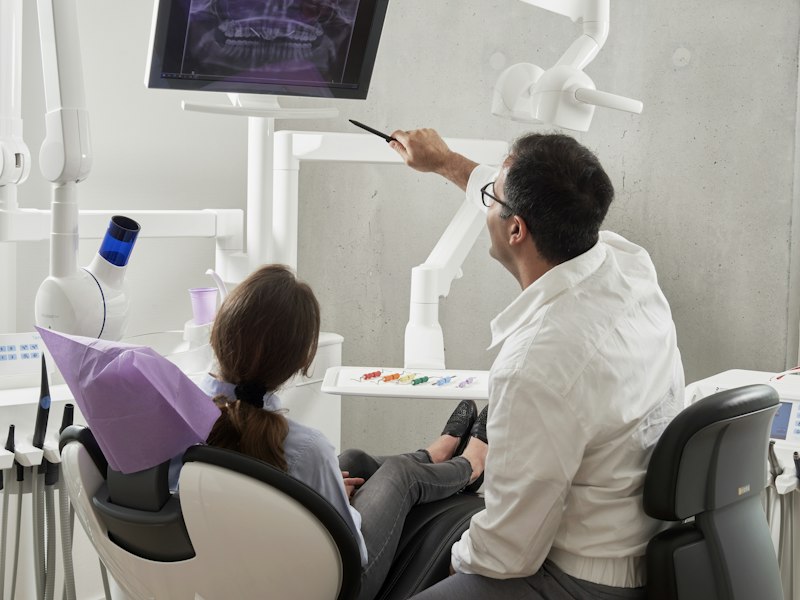
- 2. Digital occlusal analysis. Computerised bite scanning measures the timing and force of every tooth contact, revealing overloads and interferences invisible to the eye and to articulating paper alone.
- 3. Diagnosis and plan. Findings explained plainly: what is muscle, what is joint, what is bite — and which conservative measures come first. Priced from £180 per course, in writing.
- 4. Conservative treatment first. Splint or night-guard therapy, selective bite adjustment measured in fractions of a millimetre, habit coaching and, where appropriate, muscle-relaxation approaches. Irreversible treatment is never the opening move.
- 5. Verification. The bite is re-scanned after adjustment; appliances are checked for even contact; you feel the difference at the chairside rather than taking it on faith.
- 6. Protection and follow-up. A maintenance and review plan — with remote follow-up from Istanbul and an appliance any home dentist can adjust.
Materials, brands and technology
The functional toolkit is precise rather than dramatic. Digital occlusal-analysis systems (such as T-Scan-type sensors) quantify bite timing and force distribution. Hard acrylic and milled splints — made from digital scans of your own teeth — outperform pharmacy boil-and-bite guards in comfort, durability and actual therapeutic effect; a poorly fitting soft guard can even encourage chewing habits that worsen grinding. Articulators and jaw-tracking records let technicians build restorations in harmony with your joint movements, not just your closed bite. Where rebuilding is needed, the materials are the restorative standards — zirconia and E-max — engineered to a corrected bite scheme.
How bruxism treatment compares with the alternatives
A good clinician presents bruxism treatment alongside its genuine alternatives, not as the only road. The comparison that matters weighs four axes — upfront cost, how much healthy tooth structure each option preserves, expected lifespan, and what maintenance each demands — and the weighting is personal: a 35-year-old and a 70-year-old can reasonably choose differently from identical clinical findings.
Within functional dentistry, the closely related options are listed under "Related treatments" below — each with its own full guide on this site, written to the same standard as this page, so you can compare like for like. The free assessment settles which options are actually open to you: send photos on WhatsApp and the clinical team will map your realistic choices, with prices, side by side.
And the "do nothing" option deserves its honest paragraph: some conditions are stable and can be watched, while others — infection, progressive gum disease, failing teeth under load — get more complicated and more expensive with every year of delay. Ask the team directly which category your case falls into; the answer costs nothing and removes the most stressful uncertainty of all.
How much does bruxism treatment cost in Turkey vs the UK and USA?
| Country | Typical price (per course) | Saving vs Turkey |
|---|---|---|
| Turkey (Istanbul) | from £180 | — |
| United Kingdom (private) | ≈ £600 | save ~70% |
| United States | ≈ $1,200 | save ~81% |
The price difference is economics, not corner-cutting. An Istanbul clinic pays a fraction of the staff, laboratory, rent and indemnity costs of a London practice, buys materials at volume directly from the same manufacturers, and competes in a transparent international market where results are publicly reviewed. The same Straumann implant or E-max ceramic that reaches a UK clinic through an importer reaches an Istanbul clinic in bulk — at the same factory quality and a lower landed cost.
Budget honestly for the whole trip: return flights from the UK typically run £100–250, and clinic-partnered 4–5★ hotels from £40–90 per night — many treatment packages include hotel and VIP airport transfers outright. Even with travel added, the total for bruxism treatment lands at a fraction of the UK price, and for multi-tooth treatment the difference funds the entire trip several times over. See our full price comparison for every treatment.
One caution that protects you: the cheapest quote is not the best quote. Below a certain price, something must give — unbranded materials, no imaging, no guarantee, or an operator running eight chairs at once. The value target is the accredited middle: documented brands, specialist clinicians and written guarantees at Turkish cost structure. That is exactly the segment we vet for.
Why do patients travel to Turkey for bruxism treatment?
Around 1.5 million international patients travel to Turkey for dental care each year — one of the largest medical-travel flows in the world — and the reasons are practical rather than mysterious. The savings are decisive (60–70% against UK private prices, even after flights and hotels). The speed is real: in-house laboratories and full-time specialist teams compress into days what fragmented referral systems stretch into months. And the standards at the accredited end are genuinely international: ISO-certified sterilisation, digital imaging, brand-name materials and English-speaking clinical teams.
There is also a candour worth stating: not every clinic in Turkey deserves your trust, exactly as not every clinic in Britain does. The dental-tourism boom created both world-class centres and cut-price production lines, and the two can look similar in an Instagram advert. That is the specific problem DentistGuideTurkey exists to solve — we vet clinics independently, weight patient outcomes over marketing spend, and our 2025 award winner IdealCare Dental earned its place on documented results and aftercare, not advertising.
Does bruxism treatment hurt? Anaesthesia and comfort
The straight answer: the procedure should not hurt at all, and afterwards most patients report far less discomfort than they braced for. Modern local anaesthesia is profound and is not started until the clinician has verified you are fully numb — you feel pressure, movement and vibration, but not pain. For longer procedures or anxious patients, oral sedation or IV sedation with an anaesthetist is available; you remain safely responsive but deeply relaxed, and most patients remember little of the appointment.
Post-operative discomfort is honest but modest: typically a few days of tenderness managed with ordinary paracetamol or ibuprofen, peaking on day one or two and fading steadily. Clinics treating international patients are notably attentive here — you have a direct WhatsApp line to the clinical team through your recovery, and questions get answered in minutes, not at the next available appointment.
Your treatment timeline, day by day
The classic Istanbul treatment week runs like this (your written plan will personalise it):
- Before you fly: free photo assessment, written fixed plan, flights and clinic-partnered hotel booked. Total commitment so far: nothing.
- Day 1 — arrival and diagnostics: VIP transfer from the airport; full clinical examination, X-rays/3D imaging and treatment confirmation at the clinic. The plan is re-verified against reality before anything begins.
- Days 2–3 — active treatment: functional dentistry appointments scheduled in efficient blocks, with rest time between. The in-house laboratory works in parallel with your appointments.
- Days 4–5 — refinement: try-ins, adjustments, bite verification — the stage where good clinics spend the time that production lines skip. Free hours belong to Istanbul.
- Final day — completion and documentation: final review and polish, professional photos, written guarantee and aftercare kit, transfer to the airport.
Two practical notes seasoned patients pass on: fly in the day before treatment starts rather than the same morning — a rested patient is a better patient; and tell the clinic your return flight date at planning stage so the schedule protects a comfortable buffer before you fly.
What bruxism treatment looks like in practice
Illustrative composites based on typical patient journeys — details vary case by case.
Michael, 44, from London had postponed treatment for years — partly cost, partly nerves. After sending photos on WhatsApp on a Sunday evening, he had a written plan by Tuesday: bruxism treatment from £180 per course, itemised, with the timeline mapped against his work schedule. The quote at home had been £600. He flew out six weeks later, was treated across 1–3 days, and spent the free afternoons on the Bosphorus. The part he mentions most in reviews is not the price — it is that nobody rushed his decisions.
Michael, 44, from London came the cautious route: asked us to compare three clinics, messaged each with questions about materials and guarantees, and chose the one whose clinician personally answered. Treatment matched the plan to the pound; the follow-up messages after flying home were answered within the hour. He now sends the same clinic his X-rays once a year for a remote review — aftercare that costs nothing and catches problems early.
How to choose a clinic for bruxism treatment — the honest checklist
Clinic choice determines your outcome more than any other decision, including the country. Apply this checklist ruthlessly:
- Named clinicians with verifiable credentials. You should know who is treating you, their speciality and their experience — not just a clinic brand.
- Written, itemised, fixed quotes. Materials named by brand, every procedure listed, total price fixed. Vague quotes produce surprise invoices.
- Proper imaging before promises. X-rays and clinical photographs reviewed by a clinician before a firm plan is issued — a quote generated without them is a guess.
- A written guarantee with stated terms. What is covered, for how long, and what your obligations are. "Lifetime guarantee" shouted in an advert means nothing without terms on paper.
- Reviews with history. Read the 3-star reviews (the most honest tier), look for reviewers with older posts, and value complaint-handling over perfection.
- Aftercare that survives your flight home. A named contact, response times, and a clear protocol for problems — tested by messaging them before you book.
- Honest triage. The best single signal: a clinic willing to tell you that you need less treatment than you asked for.
Every clinic we refer to has passed exactly this screen — it is the entire reason this site exists. Start with our vetted clinic guide, or ask us directly on WhatsApp which clinic fits your specific case.
Aftercare once you are back home
Good treatment is a beginning, not an ending, and the aftercare model for international patients is more robust than most people expect. You fly home with written documentation — your treatment record, material brands and batches, guarantee terms and a maintenance schedule — which means any dentist in the UK or US can examine and maintain the work without guesswork. Routine maintenance (check-ups, hygiene visits) happens locally exactly as it would after treatment at home.
For anything specific to the treatment itself, your Istanbul team stays reachable on WhatsApp: send a photo, describe the issue, and you will usually have a clinical answer the same day. Minor adjustments can be handled by a local dentist for a small fee; matters under guarantee are corrected by the treating clinic under the written terms you received before travelling. Many patients also time an annual Istanbul city break with a free clinic review — the cost of the flight is still less than a single UK private appointment for major work.
What we ask of you is the boring, decisive part: keep the hygiene routine your clinician set, wear the night guard if one was prescribed, and do not skip routine reviews. The overwhelming majority of long-term problems in dentistry — anywhere in the world — grow quietly in the gaps between missed appointments.
What the evidence says about bruxism treatment
It is reasonable to ask whether treatment abroad follows the same science as treatment at home, and the answer is that the science is global. The protocols for bruxism treatment — case selection, technique, materials, healing timelines — come from the same international research base used across Europe and North America. Accredited Turkish clinics follow it because their business depends on outcomes that survive scrutiny from patients' home dentists.
Three findings from the wider research are worth knowing as a patient. First, outcomes correlate more strongly with operator experience and case volume than with geography — a high-volume specialist team is statistically your safest choice wherever it is located. Second, patient factors you control (smoking, hygiene, attending reviews) move long-term success rates more than almost any clinical variable. Third, documented, brand-name materials exist precisely because their manufacturers publish long-term data; an unbranded restoration or fixture is a data-free experiment on your health, which is why we treat named materials as non-negotiable in vetting.
Where a treatment has genuine limitations or an evidence base still maturing, an honest clinic says so during planning. Beware of any provider — in any country — for whom every treatment is "100% successful"; real medicine deals in probabilities, and informed consent means hearing them.
What is included in the price — and what to check
A properly itemised Istanbul treatment package for bruxism treatment typically includes far more than the procedure itself. As standard at the clinics we refer to, the price from £180 per course covers:
- All clinical work for the planned treatment — examination, imaging, anaesthesia, all treatment appointments and materials, with brands named in writing.
- Laboratory work — design, fabrication and any same-week adjustments by the in-house lab.
- VIP transfers between airport, hotel and clinic — standard practice for international patients.
- Hotel arrangements — either included in the package or booked at negotiated partner rates; confirm which applies to your quote.
- Aftercare — post-treatment reviews during your stay, medication where prescribed, written aftercare instructions and remote WhatsApp follow-up.
- Documentation — written guarantee, treatment records and material certificates you take home.
What is legitimately not included: flights, meals outside the hotel, and treatment for conditions discovered on examination that were not visible in photos (any such findings are discussed and priced with you before anything proceeds — never sprung on the invoice). When comparing quotes between clinics, compare the full inclusion list rather than the headline number; a bare price that excludes imaging, transfers and aftercare is not cheaper, it is incomplete.
Ten questions to ask before you book bruxism treatment
Send these to any clinic you are considering — including ours. The answers (and how quickly and clearly they arrive) tell you most of what you need to know:
- 1. Who exactly will perform my treatment, and what are their qualifications and case volume in bruxism treatment?
- 2. Which brand and product line of materials will be used for my case — in writing?
- 3. What imaging will you take before confirming my plan?
- 4. Is the quoted price fixed, and what could legitimately change it?
- 5. What does the written guarantee cover, for how long, and what are my obligations under it?
- 6. What is the realistic timeline for my case — and what happens if lab work needs an extra day?
- 7. What does aftercare look like once I am back home, and who do I contact?
- 8. What are the specific risks in my case, and how do you manage them?
- 9. Can I see recent before-and-after cases similar to mine?
- 10. If my case turns out to need less treatment than quoted, will the price come down?
That last question is the quiet masterstroke: an honest clinic answers "yes, of course" without hesitation, because plans at serious clinics are clinical documents, not sales targets. If any answer is evasive, slow or wrapped in pressure tactics ("this price is only valid today"), you have learned something worth far more than a discount.
Practical Istanbul: flights, hotels and getting around
Istanbul is one of the easiest major cities in the world to reach from the UK: direct flights of around four hours operate daily from London, Manchester, Birmingham, Edinburgh and Glasgow with Turkish Airlines, Pegasus and the budget carriers, typically at £100–250 return when booked a few weeks ahead. UK and US citizens currently enter visa-free for short tourist stays — check current entry rules before travelling, as policies evolve.
Accommodation is where dental patients are pleasantly surprised: clinic-partnered 4–5★ hotels near the treatment district cost £40–90 per night — and many treatment packages include the hotel outright. Choose the partner hotel over a distant bargain: being ten minutes from the clinic matters on treatment days, and the partner hotels are practised at hosting recovering dental patients (soft-menu room service included).
Between appointments, the city takes care of itself. The tram and metro are cheap and efficient with an Istanbulkart; the Hagia Sophia, Blue Mosque, Basilica Cistern and Grand Bazaar cluster within one walkable district; and a Bosphorus ferry at sunset costs pennies and outperforms most paid attractions. Budget meals run £5–15 at very good restaurants. Practical notes: card payment is near-universal, tap water is best swapped for bottled, pharmacies (eczane) are everywhere and well stocked, and your clinic coordinator doubles as a concierge for restaurant bookings and day-trip advice — use them.
Prefer a quick form? Get your fixed plan without picking up the phone
Fill in our short consultation form and our patient team will prepare your personalised offer.
Get an Offer via Our FormRecovery: what actually happens, week by week
Functional treatment has essentially no downtime. A new night guard feels bulky for the first three to five nights — then wearing it becomes automatic, and many grinders report easier mornings within the first fortnight. Bite adjustments feel strange for a day or two as your muscles recalibrate to the corrected contacts, then remarkably neutral: the correct result is that you stop noticing your bite entirely. TMJ symptom relief is typically gradual — weeks rather than days — as inflamed joints and overworked muscles settle; keep a simple symptom diary and share it at remote reviews, because the trend matters more than any single day. Appliances need rinsing, brushing and an occasional professional check, and replacement every three to five years as they wear.
Risks and complications — the honest section
The risks in functional dentistry are mostly the risks of poor diagnosis rather than the procedures themselves, which are conservative and reversible in their first stages. An unnecessary or badly executed bite adjustment can create the very imbalance it claimed to fix — which is why measurement (digital scanning) before grinding anything is non-negotiable, and why irreversible steps come last, not first. TMJ conditions are genuinely multifactorial; honest clinics frame treatment as management and relief rather than promising cures, and refer joint pathology beyond dental scope to the right medical specialists. Night guards carry almost no risk beyond neglect — an unwashed guard is a bacteria hotel, and a lost one protects nothing. If a clinic proposes grinding your teeth "into balance" at the first visit without digital analysis, decline politely and keep your enamel.
How long does bruxism treatment last?
With sensible maintenance, expect ongoing protection from bruxism treatment. The variables that matter are the ones you control: daily hygiene, wearing a night guard if you grind, not smoking, and attending routine reviews. Materials fail rarely; neglect fails reliably. Accredited clinics back the work with written guarantees whose terms you receive before treatment — and honour them, because international reputation is their entire business model.
Your maintenance calendar after bruxism treatment is deliberately unremarkable — the same habits that protect natural teeth protect treatment:
- Daily: brush twice with fluoride toothpaste, clean between teeth once (floss, interdental brushes or a water flosser — whichever you will actually use every day), and wear your night guard if one was prescribed.
- Every 6 months: a routine check-up and professional hygiene visit with your local dentist — exactly as you would after treatment at home.
- Every 12 months: send your Istanbul clinic a photo update or recent X-ray on WhatsApp for a free remote review; many patients pair an annual city break with an in-person check.
- Immediately, any time: report anything unusual — a chip, new sensitivity, bleeding gums, anything loose — rather than watching it. Early problems in dentistry are small, cheap and fixable; late ones are none of those things.
Frequently asked questions about bruxism treatment
Is the price really fixed? Are there hidden fees?
The itemised quote you approve is the price you pay — that is a condition of our clinic vetting. The only legitimate changes come from genuine clinical findings on examination (which are discussed and re-agreed with you before anything proceeds), never from arrival surcharges or invented extras.
How much does bruxism treatment cost in Turkey?
Prices start from £180 per course at accredited Istanbul clinics, compared with around £600 in UK private practice and $1,200 in the USA. Your exact fixed quote is confirmed in writing after a free photo assessment — before you book anything.
How many days do I need in Istanbul for bruxism treatment?
Plan for 1–3 days. The clinic schedules appointments efficiently around an in-house laboratory, so the timeline is compressed by logistics, not by rushed clinical work. Your personal itinerary is confirmed with your treatment plan.
Is bruxism treatment painful?
The procedure itself is performed under complete local anaesthesia — you feel pressure and vibration, not pain. Afterwards, most patients manage any tenderness with ordinary paracetamol or ibuprofen for a few days. Sedation options are available for anxious patients.
Is it safe to have bruxism treatment in Turkey?
Safety follows the clinic, not the country. Accredited Istanbul clinics operate to the same sterilisation, imaging and material standards as Western Europe — often with newer equipment and far higher case volume. That is why we only refer to clinics we have independently vetted, such as our 2025 award winner IdealCare Dental.
What guarantee do I get with bruxism treatment?
Accredited partner clinics provide written guarantees appropriate to the treatment and materials used, conditional only on reasonable hygiene and attending routine check-ups. You receive the guarantee terms in writing before you commit, not after.
How long does bruxism treatment last?
With sensible care, expect ongoing protection. Longevity depends chiefly on your hygiene, whether you grind your teeth (a night guard protects the investment), and attending routine maintenance — the same factors as anywhere in the world.
Can I combine bruxism treatment with a holiday in Istanbul?
Yes — most patients do. Appointments typically occupy a few hours across your stay, leaving time for the Hagia Sophia, the Grand Bazaar and the Bosphorus. Clinics arrange transfers between hotel and clinic, and appointment days are known in advance.
What happens at the free consultation?
You send photos of your teeth (and any X-rays) on WhatsApp. A clinician reviews your case and responds within 48 hours with an honest assessment, a treatment plan and a fixed itemised price. There is no obligation and no deposit at this stage.
Do the dentists speak English?
Yes. The international clinics we refer to operate primarily in English — clinicians, coordinators and aftercare staff included — and provide translators for other languages. Every document you sign, including your plan and guarantee, is issued in English.
What if something goes wrong after I fly home?
You keep a direct WhatsApp line to your clinical team, and minor issues are usually resolved with remote guidance or a short visit to a local dentist. For matters covered by guarantee, the clinic corrects its own work — the terms are in writing before you travel.
Why is bruxism treatment so much cheaper in Turkey?
Lower salaries, laboratory, property and insurance costs — not lower standards. The materials are the same international brands, often the same equipment, delivered in an economy where clinical overheads are a fraction of London's. High patient volume lets clinics price competitively while investing heavily in technology.
How soon can I eat normally after bruxism treatment?
For non-surgical treatments, as soon as local anaesthesia wears off. Surgical procedures need a soft-food period — typically days to a couple of weeks — which your aftercare sheet sets out precisely. Your clinician gives you a personal timeline before you leave the chair.
Will my dentist at home be able to maintain the work?
Yes. Accredited clinics use internationally standard materials and techniques and provide full documentation — including brands, batch numbers and, for implants, implant passports — so any competent dentist worldwide can examine and maintain your treatment.
How do I get started with bruxism treatment?
Send photos of your teeth via WhatsApp (+90 553 543 5342) or the consultation form on this page. You will receive a personalised, fixed-price plan within 48 hours — free, in English and with no obligation to proceed.
Which brands and materials are used for bruxism treatment?
Only documented international brands: Straumann, Nobel Biocare and MIS implant systems; E-max and premium multi-layer zirconia ceramics; CE-marked biomaterials. Your written plan names the exact materials for your case, and the clinic documents batch numbers after treatment.
Am I too old for bruxism treatment?
Almost certainly not — health matters far more than age, and patients in their seventies and eighties are treated routinely. What the clinic will assess honestly is your medical history and medications; well-managed conditions rarely prevent treatment.
I am a nervous patient. Can I still have bruxism treatment?
Yes — dental anxiety is one of the most common reasons patients choose these clinics, which treat fearful international patients every day. Options range from a slower, fully explained pace to oral or IV sedation. Tell the team when you enquire and the plan is built around it.
Related treatments and reading
Patient information only. This page is written and reviewed by the DentistGuideTurkey clinical team for education and does not replace examination, diagnosis or treatment planning by a qualified dental professional. Prices are indicative starting prices confirmed individually in written treatment plans.