
Clinical review required: Temporomandibular disorders have joint, muscle, headache and psychosocial components. Persistent or severe symptoms require diagnosis, not irreversible bite treatment.
What is TMJ treatment?
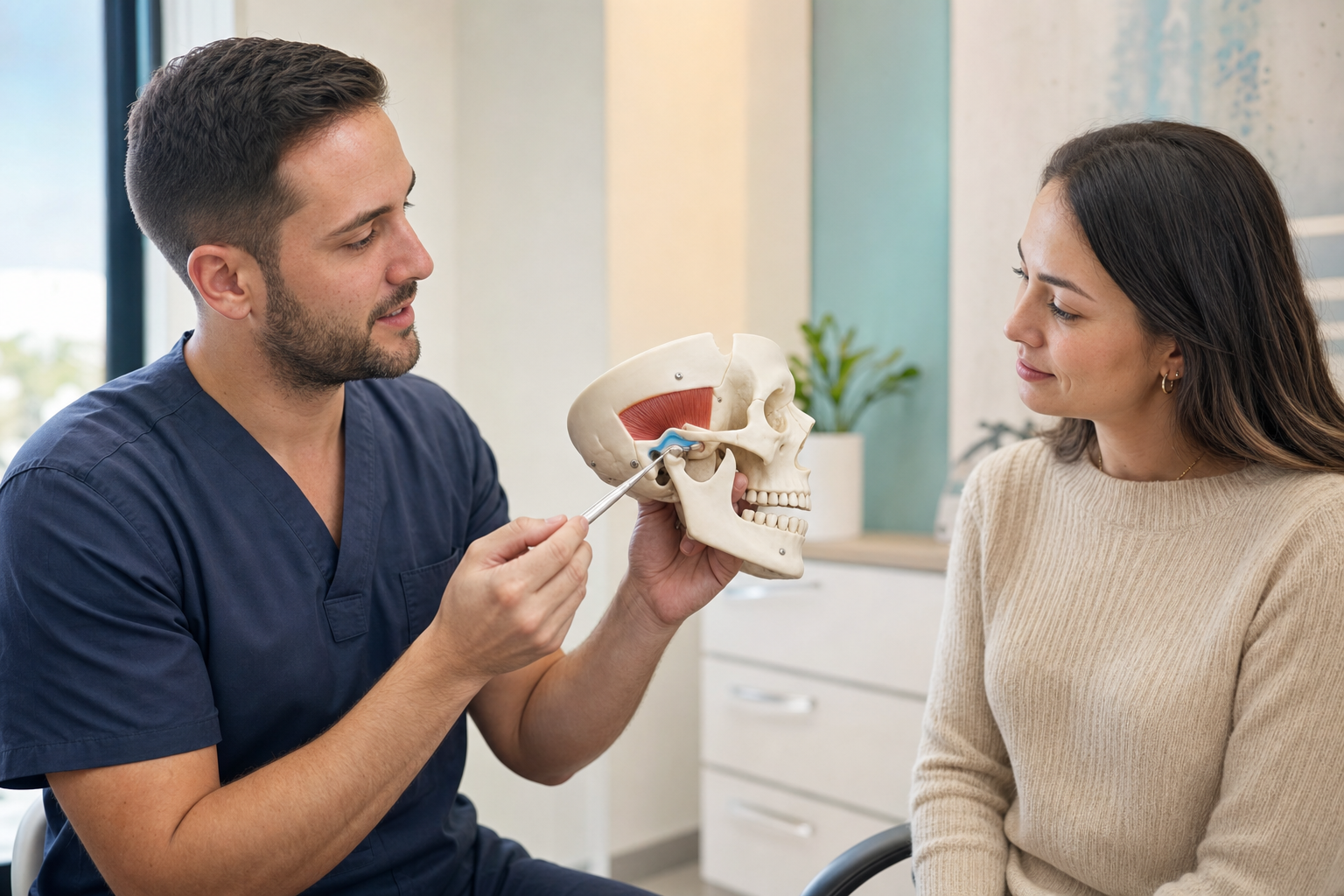
The temporomandibular joints connect the lower jaw to the skull, but “TMJ” is often used loosely for temporomandibular disorders (TMD). TMD includes pain in jaw muscles or joints, limited movement, locking and some joint noises. Treatment depends on the diagnosis and usually begins with reversible conservative care. A click without pain or limitation often needs explanation rather than intervention.
Muscle pain versus joint pain
Myalgia is reproduced by palpation or jaw use in chewing muscles and may spread to temple, ear or neck. Arthralgia is pain localised to the joint and provoked by movement or palpation. Disc displacement can cause clicking or locking. Degenerative joint disease can produce crepitus. Several diagnoses can coexist, so a single label does not define treatment.
Symptoms
Jaw or temple pain, fatigue while chewing, limited opening, deviation, clicking, locking and headache associated with jaw function are common. Ear fullness or tinnitus can coexist but require appropriate medical evaluation. Toothache-like pain may arise from muscle referral, while genuine dental infection can mimic TMD.
Red flags
Rapid swelling, fever, trauma, new facial weakness, numbness, severe headache, visual symptoms, unexplained weight loss, a persistent mass, progressive bite change or inability to eat requires prompt assessment. Sudden closed lock, dislocation or suspected fracture may need urgent care. TMD should not be used to explain every facial pain.
Clinical assessment
The clinician records pain location and duration, jaw movement, locking, trauma, headaches, sleep, stress and treatments. Examination measures opening and excursions, palpates muscles and joints and assesses noises and bite without assuming causation. Standardised Diagnostic Criteria for TMD improve classification. Dental, neurological and ear conditions are considered.
When imaging is needed
Most uncomplicated muscle pain does not require imaging. Panoramic radiography screens bone; CBCT evaluates osseous change or trauma; MRI shows disc and soft tissues. Imaging should answer a question that changes management. Incidental disc displacement or degeneration is common and does not automatically explain pain.
Education and reassurance
Many TMD episodes improve with time and conservative care. Understanding that pain does not necessarily mean progressive joint damage can reduce fear and guarding. Patients learn to recognise daytime clenching, avoid repeatedly testing the jaw and return gradually to normal movement. Reassurance should not dismiss symptoms or red flags.
Self-management
Short-term softer foods, smaller bites and reduced gum chewing can calm a flare. Heat or cold is chosen by comfort. Keep teeth apart at rest with lips lightly together and tongue relaxed. Avoid extreme opening temporarily, but prolonged immobilisation can worsen stiffness. Sleep, pacing and stress-management strategies support recovery.
Exercise and physical therapy
Controlled opening, coordination, stretching and strengthening are tailored to diagnosis. Manual therapy may address jaw and cervical contributors. A systematic review found exercise can improve pain and opening, though protocols vary. Forceful generic exercises can aggravate acute locking, so instruction and graded progression matter.
Occlusal splints
Stabilisation appliances can protect teeth and help selected pain or movement disorders. They do not permanently reposition the joint or prove the bite caused pain. A 2026 umbrella review found mainly small beneficial or neutral effects compared with other conservative care. Splints should fit fully, be monitored and discontinued or adjusted if symptoms or bite change.
Soft versus hard appliances
Hard full-coverage stabilisation splints permit controlled contacts and adjustment. Soft guards may feel comfortable but can increase chewing activity in some people. Partial-coverage appliances risk tooth movement if worn unsupervised. Appliance design, wear schedule and objective should be documented; an online guard is not diagnosis-led care.
Medicines
Short courses of non-steroidal anti-inflammatory drugs or paracetamol may be considered with medical contraindications reviewed. Muscle relaxants or other pain medicines have specific roles and adverse effects. Opioids are generally inappropriate for chronic TMD. Medication supports function while active rehabilitation addresses contributing factors.
Bruxism and clenching
Awake clenching can be modified with awareness and behaviour. Sleep bruxism is a sleep-related motor activity, not simply stress, and may associate with sleep apnoea or medicines. It can damage teeth without causing every TMD symptom. A splint protects structures but does not necessarily stop brain-driven bruxism.
Stress and chronic pain
Stress, anxiety, poor sleep and pain amplification can influence symptoms without making pain imaginary. Cognitive behavioural approaches, relaxation, sleep care and multidisciplinary pain management can improve coping and function. Chronic pain treatment focuses on valued activity and nervous-system regulation as well as local tissues.
Headache
Headache attributed to TMD is modified by jaw movement or provoked by familiar muscle or joint palpation. Migraine and tension-type headache often coexist and require medical diagnosis. Conservative TMD treatment may help selected headache outcomes, but evidence is uncertain. New or severe headache red flags need urgent medical assessment.
Injections
Trigger-point injections, corticosteroid, hyaluronic acid, platelet concentrates and botulinum toxin are used in selected settings with varying evidence. Risks include infection, tissue damage, weakness, altered chewing and cost. Botulinum toxin can reduce muscle activity but repeated use may affect muscle and bone. Injections should not precede diagnosis and conservative options routinely.
Arthrocentesis and arthroscopy
Joint lavage or minimally invasive arthroscopy may be considered for persistent painful locking or inflammatory intra-articular disease after conservative care. They can improve movement and pain in selected patients but do not restore a normal disc in every case. Oral and maxillofacial specialist assessment is appropriate.
Open joint surgery
Open procedures are reserved for structural disease, ankylosis, tumours, severe degeneration or failure of less invasive management. Risks include facial nerve injury, scarring, bite change, infection and persistent pain. Surgery is not routine treatment for clicking or muscle pain.
Irreversible bite treatment
Grinding teeth, extensive crowns, orthodontics or permanent mandibular repositioning should not be first-line treatment solely for TMD pain. Evidence that occlusal adjustment treats TMD is lacking. Dental work may be required for independent restorative reasons, but pain fluctuations should not drive irreversible full-mouth treatment without strong indication.
Recovery and tracking
Track pain intensity, function, opening, locking and triggers over weeks rather than checking repeatedly each hour. Improvement is often non-linear. Goals include eating, speaking, sleeping and returning to activity, not eliminating every click. Persistent deterioration prompts diagnostic review.
Dental causes that mimic TMD
Cracked teeth, pulpitis, abscess, sinus-related pain and recent high restorations can refer pain to the jaw or ear. A dental examination, vitality tests and focused imaging may be necessary. Conversely, muscle trigger points can feel like toothache and lead to unnecessary root-canal treatment. Familiar pain reproduced by examination helps distinguish sources, but more than one condition can coexist.
Ear and neurological conditions
Ear infection, salivary disease, neuralgia, migraine and other neurological or head-and-neck conditions can overlap. Persistent hearing loss, discharge, vertigo, neurological deficits or pain unrelated to jaw movement needs appropriate referral. TMD treatment should not delay medical evaluation because symptoms happen near the joint.
Sleep and possible sleep apnoea
Poor sleep amplifies pain, and sleep bruxism can coexist with obstructive sleep apnoea. Loud snoring, witnessed breathing pauses, morning headaches or severe daytime sleepiness warrant medical sleep assessment. A dental splint designed for TMD is not the same as a mandibular advancement device, and some appliances can worsen airway or bite issues if used without diagnosis.
Acute closed lock
A disc may displace without reducing, suddenly limiting opening. Early assessment documents range, pain and deviation and excludes trauma or infection. Gentle self-care, medicines and guided mobilisation may help; forceful manipulation is not appropriate for every patient. Persistent functional limitation can prompt MRI and specialist consideration of arthrocentesis or arthroscopy.
Open lock and dislocation
When the jaw becomes stuck open, the condyle may be dislocated in front of the joint eminence. This requires prompt professional reduction and assessment, particularly after trauma or repeated events. Patients should not attempt forceful internet techniques. Recurrent dislocation has different management from painful clicking and may require specialist procedures.
Arthritis and systemic disease
Rheumatoid, psoriatic and other inflammatory arthritides can involve the TMJ, sometimes bilaterally. Morning stiffness, multiple-joint symptoms and systemic signs support medical coordination. Juvenile arthritis can affect jaw growth. Dental splints may protect teeth or support symptoms but do not treat systemic inflammation. Rheumatology input and imaging may be needed.
Teenagers and growth
TMD symptoms can occur in adolescents, but irreversible bite or surgical treatment demands caution during growth. Education, habit awareness, exercise and time-limited conservative care are preferred. Persistent locking, asymmetry, trauma or inflammatory disease requires specialist assessment. Appliance fit and occlusion must be monitored as teeth and jaws change.
Measuring improvement
Useful outcomes include average and worst pain, disability, comfortable opening, eating range, locking frequency, analgesic use, sleep and participation. Joint sounds alone are a poor endpoint if they are painless. A treatment should be reviewed and modified if function does not improve within a reasonable trial rather than continued indefinitely because the appliance shows wear.
Nutrition during a painful flare
A temporarily softer diet reduces load while maintaining adequate calories and protein. Choose foods that need less chewing rather than relying only on liquids, and gradually restore normal texture as pain improves. Prolonged avoidance can decondition muscles and reinforce fear. Weight loss, inability to maintain hydration or difficulty swallowing is not routine TMD and needs prompt assessment.
Work, posture and device habits
Long periods of concentrated screen work can accompany jaw bracing, forward-head posture and fewer movement breaks. Ergonomic adjustment alone does not cure TMD, but regular pauses, relaxed tooth separation and varied posture can reduce sustained muscle loading. Holding a phone between shoulder and ear or chewing objects may aggravate symptoms. Behaviour change should be practical and non-punitive.
Treatment abroad
TMD care usually requires longitudinal follow-up and is poorly suited to irreversible tourism packages. Request the diagnosis, examination findings, imaging rationale and conservative plan. Avoid rapid full-mouth bite reconstruction or permanent repositioning sold as a guaranteed cure. Ensure splint adjustments and specialist care are available at home.
Questions to ask
- Is pain muscle, joint or another condition?
- Are there red flags?
- Would imaging change treatment?
- What reversible options come first?
- What is the splint intended to achieve?
- How will progress be measured?
- When is specialist referral appropriate?
- Is any proposed bite change irreversible?
Frequently asked questions
Does clicking mean the joint is damaged?
Not necessarily. Painless clicking without locking or limitation often needs monitoring only.
Can a night guard cure TMD?
No. It can help selected patients or protect teeth, but average benefit over other conservative care is small or neutral.
Is TMD caused by a bad bite?
TMD is multifactorial; bite features alone rarely justify irreversible treatment.
Will surgery be needed?
Most patients begin and improve with conservative care; surgery is reserved for selected structural disease or persistent dysfunction.
Sources and clinical review references
- Occlusal splints for TMD: evidence from systematic reviews.
- Manual therapy versus occlusal splints.
- Exercise therapy for TMD pain and mouth opening.
- Conservative TMD interventions and headache outcomes.
Editorial review note: Evidence reviewed 22 July 2026. Named clinician review is required before indexation.