
Clinical review required: Tooth wear is multifactorial. Diagnosis should distinguish physiological change from pathological progression and identify chemical erosion, attrition, abrasion, eating or reflux disorders, salivary problems and mechanical load before restoration.
What are worn teeth?
Tooth wear is the loss of enamel and dentine not primarily caused by decay or trauma. Some wear accumulates normally with age. It becomes pathological when the rate, extent or symptoms threaten function, appearance, pulp health or future restorability. The pattern often reflects several interacting causes rather than one habit.
Attrition, erosion and abrasion
Attrition describes tooth-to-tooth wear, often creating matching facets. Erosion is chemical softening from non-bacterial acids. Abrasion is wear from external mechanical factors such as aggressive brushing or habits. These mechanisms combine: acid-softened enamel can be removed more readily by tooth contact or brushing.
Symptoms and signs
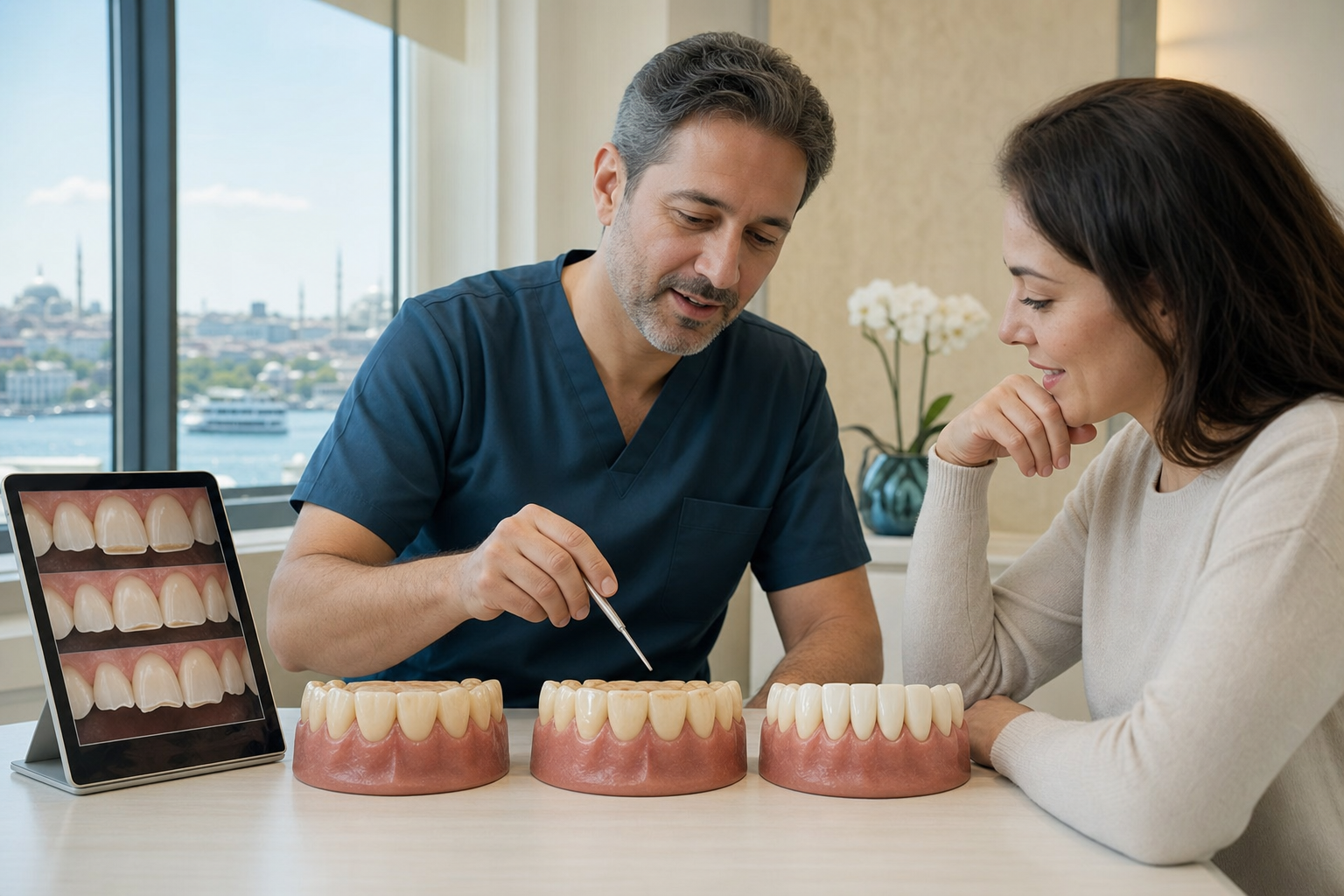
Teeth may look shorter, flatter, translucent or cupped. Dentine can appear yellow, edges may chip and fillings may stand proud. Sensitivity, roughness, altered bite and aesthetic concern can occur. Severe wear does not always cause pain because the pulp may lay down protective dentine over time.
Bruxism
Awake clenching and sleep bruxism can increase mechanical load and fracture risk. Wear facets alone do not prove current sleep bruxism because they record past and present processes. Diagnosis considers reports, muscle symptoms, partners' observations, sleep factors and restoration damage. A night guard protects but does not necessarily stop the activity.
Dietary acid
Frequent acidic drinks, citrus, vinegar products, sports supplements and sour sweets can soften enamel. Frequency and contact time matter. Swishing, holding drinks and sipping throughout the day increase exposure. Sugar-free acidic drinks can still erode even when their decay risk is lower.
Intrinsic acid and reflux
Gastro-oesophageal reflux, recurrent vomiting and regurgitation can expose teeth to stomach acid, often affecting inner upper surfaces. Dental wear may be one clue but cannot diagnose reflux or an eating disorder. Sensitive, non-judgemental medical referral is important, particularly with heartburn, swallowing problems or unexplained weight change.
Dry mouth
Saliva dilutes and buffers acid and supports remineralisation. Medicines, autoimmune disease, dehydration and radiotherapy can reduce flow. Dry mouth can accelerate both erosion and decay. Management includes reviewing causes, water, sugar-free gum when safe, fluoride and saliva-support measures.
How wear is measured
Clinical indices describe severity, while photographs, study models and digital scans document progression. Comparing records over time distinguishes active loss from a stable historical pattern. Bite, pulp status, restorations, sensitivity and facial proportions are also assessed. A single scan cannot explain the cause.
When monitoring is enough
Mild stable wear without symptoms or functional concern may need prevention and periodic records rather than restoration. Restoring every facet can begin an unnecessary treatment cycle. Monitoring must include agreed triggers such as measurable progression, sensitivity, fracture or loss of restorative space.
Preventing acid wear
Reduce frequency and duration of acidic exposure, choose water between meals and avoid swishing. Rinse with water after acid and allow saliva time before brushing. Do not use baking soda or abrasive powders aggressively. Medical management of reflux or vomiting is central when intrinsic acid is involved.
Fluoride and sensitivity
Fluoride toothpaste and professionally selected products can support mineral resistance and sensitivity control. Desensitising toothpaste may reduce symptoms. These measures do not replace lost anatomy or stop ongoing heavy load. Persistent local pain should be investigated for cracks, pulp disease or decay.
Night guards
A custom full-coverage guard can protect tooth and restoration surfaces and provide a replaceable wear layer. It requires fit, bite and airway assessment and regular review. Soft appliances may increase activity for some people; partial-coverage devices can move teeth. Guards do not treat reflux.
Additive composite rehabilitation
Direct composite can restore shape with limited or no tooth preparation. It is repairable and useful for testing an increased vertical dimension. Chipping and wear are expected maintenance events in extensive cases. Good planning, isolation and review are more important than promising permanence.
Indirect restorations
Onlays, overlays and veneers made from ceramic or composite can restore larger defects. They may offer surface stability but require laboratory or digital planning and sometimes tooth reduction. Indirect treatment is not automatically superior; preservation, material thickness, bonding substrate and repairability matter.
Increasing vertical dimension
Severe wear does not always mean the bite has “collapsed,” because teeth and supporting tissues can compensate. When restorative space is needed, clinicians may increase the vertical dimension after assessment and sometimes a reversible trial. Adaptation is monitored for comfort, speech, function and joint symptoms.
Dahl concept
The Dahl approach places selected anterior restorations in increased contact, allowing posterior contacts to re-establish through tooth movement and adaptation. It can create restorative space conservatively in suitable patients. It requires stable periodontal support, consent, monitoring and acceptance that re-establishment is not instantaneous or guaranteed.
Full-mouth rehabilitation
Generalised severe wear may require coordinated restoration of many teeth. Treatment begins with cause control, records and a diagnostic design. Provisional or additive stages test appearance and function. The plan should define maintenance, repairs and what happens if one part fails.
Restoration maintenance
Composite can be polished, added to or repaired; ceramic may chip or debond and sometimes needs replacement. Check margins, bite, hygiene and guards. Continued acid or bruxism exposure can damage any material. A maintenance budget and realistic repair expectation are part of consent.
Children and young adults
Significant wear in a young patient deserves careful investigation of diet, reflux, vomiting, developmental enamel defects and bruxism. Conservative prevention and additive repair preserve tissue while growth continues. Extensive irreversible preparation should be approached cautiously.
Treatment abroad
Request the wear diagnosis, cause-control plan, digital or physical records, proposed vertical change, material map and repair protocol. A full set of crowns placed without documenting active erosion or grinding may transfer the same forces to more invasive restorations. Ensure local follow-up is available.
Questions to ask
- Is my wear active and pathological?
- Which mechanisms are contributing?
- Can we document progression before restoring?
- Can treatment be additive and repairable?
- Why is a vertical change proposed?
- What maintenance and failures should I expect?
Frequently asked questions
Do worn teeth always mean grinding?
No. Acid erosion, abrasion, saliva and tooth anatomy often interact with mechanical load.
Can enamel grow back?
No. Early softened surfaces can reharden, but lost contour does not regenerate.
Do I need crowns on every tooth?
Often not. Monitoring, direct composite and partial-coverage restorations can preserve more tissue in suitable cases.
Can a night guard fix wear?
It can protect against some loading but cannot replace lost tooth structure or treat acid exposure.
Sources and clinical review references
- Minimally invasive rehabilitation of the worn dentition.
- Restorative options for moderate and severe tooth wear.
- Composite restorations for localised anterior tooth wear.
- Bruxism, reflux and tooth wear.
Editorial review note: Evidence reviewed 22 July 2026. Named clinician review is required before indexation.