
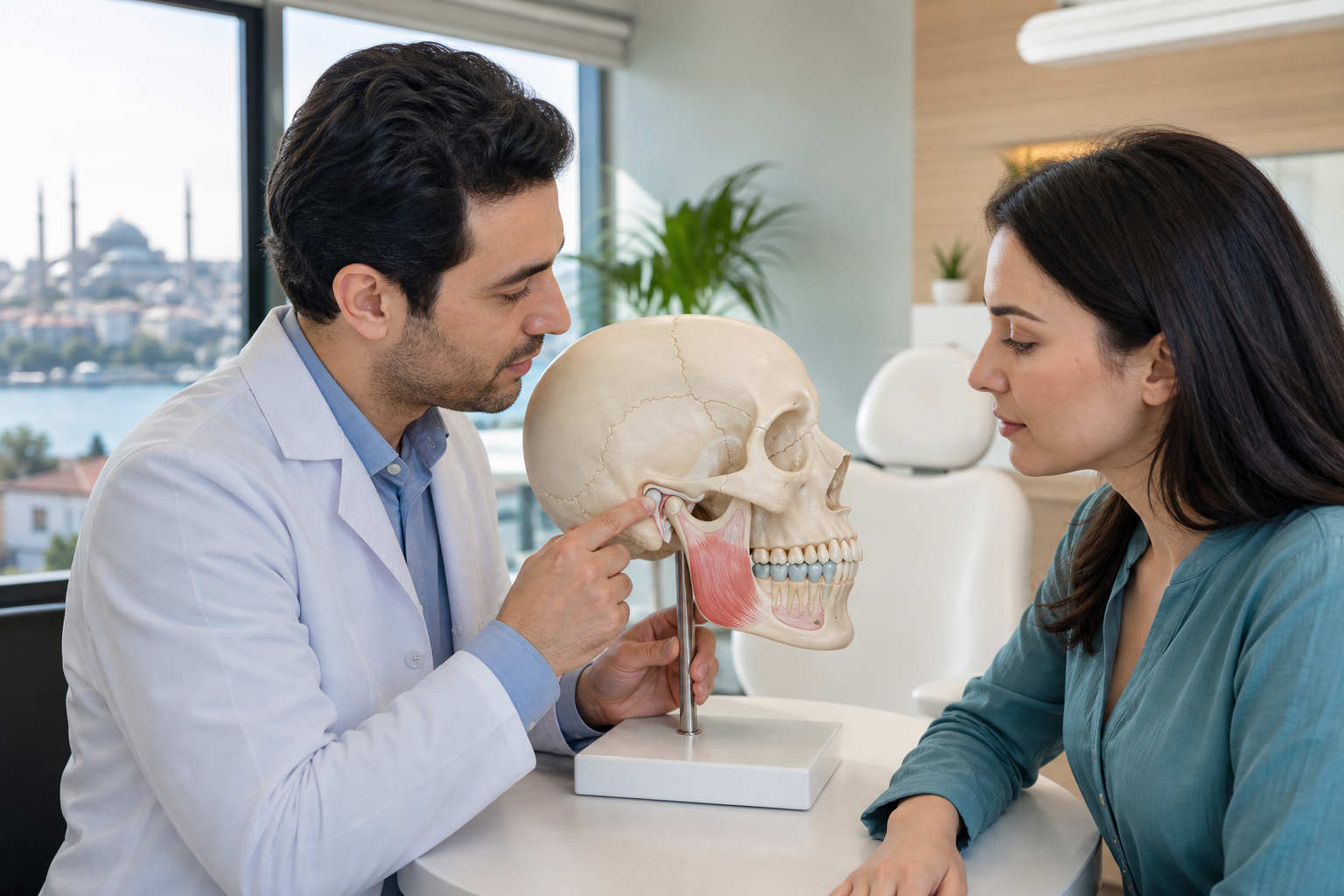
Clinical review required: Jaw pain can come from teeth, infection, muscles, temporomandibular joints, nerves, trauma or medical conditions. Seek urgent help for spreading swelling, fever with facial pain, breathing or swallowing difficulty, major trauma, a jaw locked open, new facial weakness or numbness, chest pain, or sudden severe headache.
What causes jaw pain?
“Jaw pain” describes a location, not one disease. The source may be a tooth or gum, chewing muscles, the temporomandibular joint (TMJ), salivary glands, sinus, ear, nerve or another structure. Pain can also be referred from the neck or, rarely, from cardiovascular disease. Diagnosis begins by reproducing and mapping symptoms rather than assuming every ache is TMJ disorder.
Dental causes
Deep decay, pulp inflammation, abscess, a cracked tooth, periodontal infection, a high restoration and impacted teeth can produce jaw or facial pain. Tooth pain may be triggered by temperature or biting, but referral patterns can be misleading. Swelling, bad taste, a gum pimple or systemic illness increases the need for prompt dental assessment and source control.
Temporomandibular disorders
TMD is an umbrella term for conditions affecting the jaw muscles, TMJs and related structures. Common presentations include muscle pain, joint pain, headache attributed to TMD, disc displacement and degenerative joint change. Clicking alone is common and does not necessarily require treatment. Pain and functional limitation carry more weight than sound alone.
Muscle-related pain
Myalgia may feel dull, tired or tight and can worsen with chewing, clenching, wide opening or sustained posture. Pressing the relevant muscle during examination may reproduce familiar pain. Stress and sleep problems can influence symptom intensity without making the pain imaginary. Treatment usually emphasises education, load management and active rehabilitation.
Joint-related pain
TMJ arthralgia is usually felt just in front of the ear and may increase with opening, chewing or side movement. Inflammation, overload and degenerative change can contribute. Imaging findings do not always match symptoms: some people have structural change without pain, while others have pain with limited radiographic abnormality.
Clicking, popping and crepitus
A click can occur when a displaced disc reduces during movement. Coarse grating may accompany degenerative change. Sound without pain or locking often needs reassurance and monitoring rather than irreversible bite alteration. A new sound after trauma, pain, reduced function or progressive change merits examination.
Limited opening and locking
Muscle guarding, inflammation, disc displacement, arthritis, infection, trauma and other conditions can limit opening. A closed lock means the mouth will not open normally; an open lock means it cannot close. A jaw locked open needs urgent care. Forced manipulation at home can worsen tissue injury.
Ear symptoms and headache
TMD can coexist with ear fullness, tinnitus or headache, but ear disease, migraine and neurological causes must be considered. Normal dental imaging does not exclude migraine, and a normal ear examination does not automatically prove TMD. Symptom timing, triggers and examination guide referral.
How jaw pain is assessed
The clinician records onset, trauma, pain pattern, locking, noises, headache, sleep, medications and functional limits. Examination includes teeth, gums, bite, jaw movement, joint palpation, muscle palpation and cranial-nerve screening when indicated. A pain drawing and validated questionnaires can document impact and change over time.
When imaging is needed
Many common muscle and joint pain presentations can be diagnosed clinically. Panoramic radiography assesses teeth and broad bony anatomy; CBCT shows bone; MRI is better for disc and soft tissue. Imaging is selected for trauma, suspected structural disease, persistent locking, neurological signs or when the result will change management—not simply to validate pain.
First-line self-management
Temporary reduction of hard or chewy foods, avoiding very wide opening, maintaining gentle normal movement, warm or cool packs and attention to daytime jaw bracing can help. The goal is not prolonged immobilisation. A clinician may recommend graded jaw exercises, posture work and pain education based on the diagnosis.
Medicines
Short courses of analgesic or anti-inflammatory medicine may be considered when medically appropriate. Gastrointestinal, kidney, cardiovascular, pregnancy and drug-interaction risks matter. Opioids and long-term sedating medicine are generally poor solutions for chronic TMD pain. Medication should support, not replace, active management.
Physical therapy and behavioural care
Supervised jaw exercise, stretching, mobilisation, postural exercise and manual trigger-point care have supportive evidence for chronic TMD pain. Cognitive behavioural approaches can reduce disability and improve coping. These treatments do not imply symptoms are psychological; they address the nervous, muscular and behavioural factors that maintain chronic pain.
Occlusal splints
A reversible appliance may protect teeth or help selected symptoms, but it is not a universal cure and should not permanently change the bite. Fit, material, coverage and follow-up matter. Worsening pain, a changing bite or tooth movement requires review. Over-the-counter guards may be unsuitable for people with active dental disease or complex symptoms.
Bite adjustment and orthodontics
Irreversible grinding of teeth, crowns or orthodontic treatment should not be offered solely as a routine cure for non-specific TMD pain. A genuinely high filling or unstable prosthesis may need correction, but occlusion is only one part of assessment. Structural dental treatment should have its own clear indication.
Injections and surgery
Most jaw pain is managed conservatively. Injections, arthrocentesis or surgery are reserved for selected diagnoses and should follow appropriate imaging, non-surgical care and shared decision-making. Benefits, uncertainty and risks—including nerve injury, infection, bite change and persistent pain—must be discussed.
Red flags
Urgent evaluation is needed for trauma with altered bite, rapidly increasing swelling, fever, swallowing or breathing difficulty, unexplained weight loss, a persistent mass, new numbness, weakness or neurological deficit. Jaw discomfort with chest pressure, breathlessness, sweating or nausea can be a medical emergency.
Recovery and persistence
Many acute muscle and joint episodes improve with conservative care. Chronic pain is influenced by duration, sleep, general health, widespread pain and psychosocial load. Improvement may mean better function and fewer flares before complete pain relief. Repeated invasive treatment without a revised diagnosis can increase harm.
Treatment abroad and records
Request the working diagnosis, examination findings, movement measurements, imaging files and reason for any appliance or procedure. Ask how emergencies and bite changes will be managed after travel. Avoid irreversible occlusal treatment presented as a guaranteed cure without diagnostic criteria and conservative alternatives.
Questions to ask
- Is the familiar pain reproduced from a tooth, muscle or joint?
- Are infection, trauma and neurological causes excluded?
- Will imaging change the plan?
- Which reversible treatment comes first?
- How will function and pain be measured?
- When is specialist referral appropriate?
Frequently asked questions
Does clicking mean the joint is damaged?
Not necessarily. Painless clicking is common and often needs no treatment.
Can stress cause jaw pain?
Stress can increase muscle bracing and pain sensitivity, but diagnosis should still assess dental and joint causes.
Will a night guard cure TMD?
No appliance guarantees a cure; it may protect teeth or help selected patients as part of a broader plan.
Should I stop moving my jaw?
Usually no. Relative rest and gentle movement are generally preferable to prolonged immobilisation unless specifically directed.
Sources and clinical review references
- Clinical practice guideline for chronic TMD pain.
- TMD pain treatments: network meta-analysis.
- Exercise and occlusal splint therapy for painful TMD.
- Manual therapy and occlusal splints: systematic review.
Editorial review note: Evidence reviewed 22 July 2026. Named clinician review is required before indexation.