
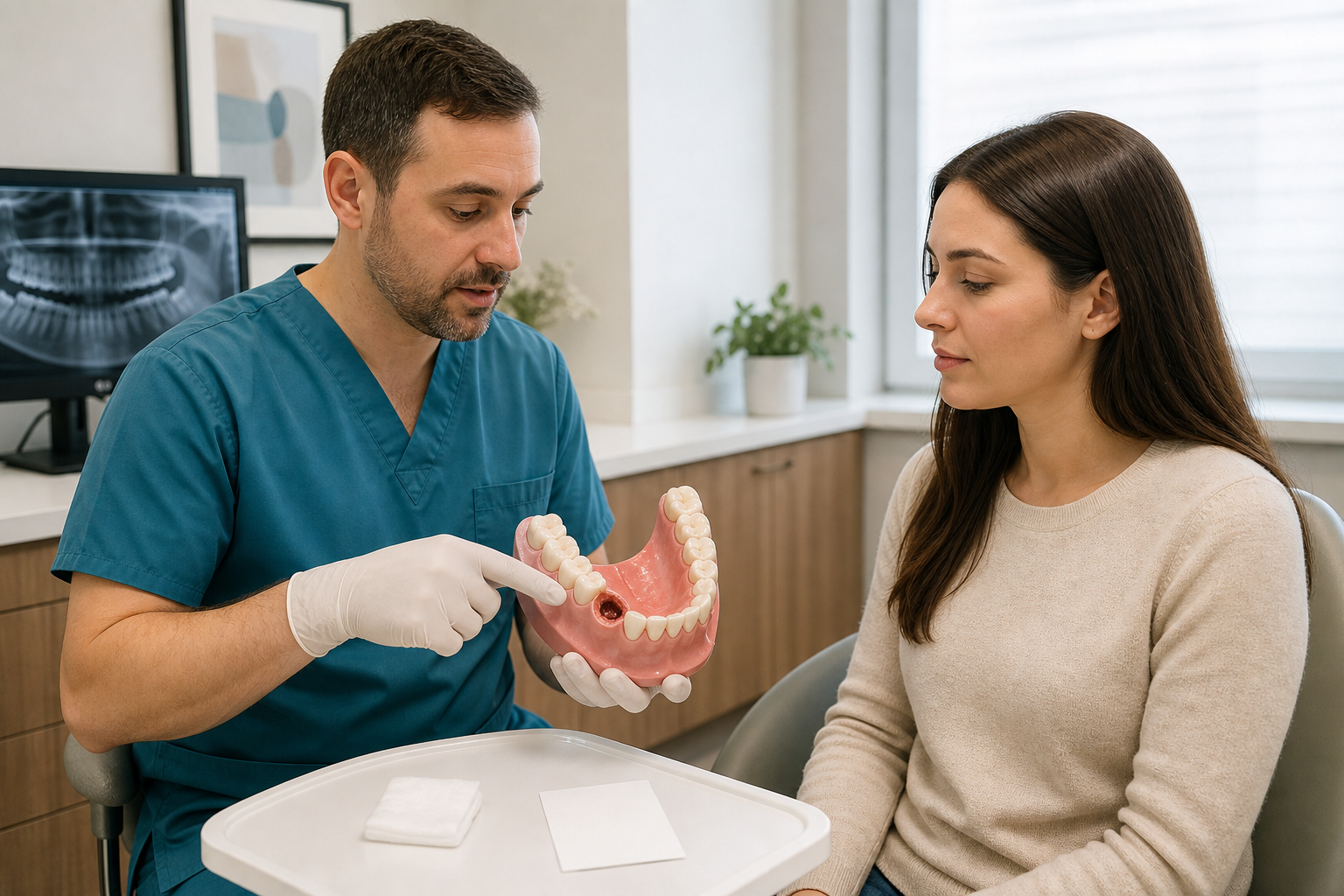
Clinical review required: Follow the surgeon's instructions. Simple extraction, surgical removal, anticoagulant use and sinus proximity can change aftercare.
What is extraction aftercare?
Aftercare protects the blood clot, controls bleeding and pain, keeps the mouth clean and identifies complications early. The socket heals from the bottom and sides; the visible opening can remain after discomfort resolves. Disturbing the clot or ignoring heavy bleeding can delay healing.
Gauze and bleeding
Bite with firm continuous pressure for the interval instructed. Sit upright and avoid talking or repeatedly lifting gauze. Pink saliva and mild oozing are common on the first day. If bleeding remains active, place fresh folded gauze and repeat pressure. Heavy bleeding, large clots, dizziness or failure to slow needs urgent contact.
The first 24 hours
Do not rinse vigorously, spit forcefully, use straws, smoke or probe the socket. Avoid strenuous exercise and alcohol. Swallow saliva gently. These measures protect the early clot. Follow the specific timeline given by the surgeon because a sutured surgical extraction may differ from a simple socket.
Food and fluids
Drink cool or lukewarm fluids and choose nutritious soft food. Chew away from the socket and avoid sharp crumbs, seeds and very hot items. As comfort improves, return gradually to a varied diet. A prolonged sugary liquid diet is unnecessary and can increase decay risk elsewhere.
Pain relief
Use the agreed analgesic regimen within personal dose limits. NSAIDs and acetaminophen are effective for many patients, but medical contraindications matter. Aspirin can affect bleeding and should only be used according to medical advice. Opioids impair driving and interact with alcohol and sedatives. Increasing pain after initial improvement needs review.
Swelling and bruising
Swelling may peak two or three days after surgical extraction. Cold packs through cloth can support early comfort if advised. Bruising can spread down the jaw. Swelling that becomes rapidly larger, extends to the neck or eye, or affects breathing or swallowing is urgent.
Cleaning the mouth
Brush other teeth normally. After the interval directed, clean gently near the socket and begin gentle salt-water rinses if recommended. Do not force bristles, floss or an irrigator into the wound. Food debris is managed with the technique and timing provided; lower wisdom-tooth sockets may later require a syringe.
Sutures
Dissolving sutures loosen as swelling falls. Non-resorbable sutures need removal. Do not cut or pull them. A loose end can feel irritating without the wound being open. Contact the clinic if tissue separates widely, bleeding restarts or a suture traps painful debris.
Dry socket
Alveolar osteitis usually causes increasing deep pain several days after extraction, often radiating to the ear or temple, with unpleasant taste or smell. It is not simply an empty-looking socket and is not treated by scraping at home. The dentist irrigates and may place a soothing dressing. Antibiotics are not automatically required.
Smoking and vaping
Smoking increases dry-socket and healing risk through suction, heat, chemicals and biological effects. Avoid tobacco and vaping for the period advised, ideally using cessation support. Nicotine replacement choices should be discussed because oral products can contact the wound. Reducing is not equivalent to eliminating risk.
Chlorhexidine
Evidence supports chlorhexidine formulations for reducing alveolar osteitis in selected patients, but concentration, rinse versus gel, allergy and staining matter. Use only as directed and not immediately when vigorous rinsing is prohibited. It does not replace mechanical cleaning or professional treatment of a complication.
Antibiotics
Routine antibiotics are not necessary after every extraction. They may be prescribed for spreading infection, systemic signs, selected surgery or medical risk. Complete the instructed regimen and report allergy or severe diarrhoea. Persistent pain without systemic infection may be dry socket, retained debris or another local issue rather than an antibiotic deficiency.
Sinus precautions
Upper back teeth can be close to the maxillary sinus. If advised, avoid nose blowing and pressure changes and sneeze with the mouth open. Fluid passing between mouth and nose, whistling, one-sided nasal discharge or worsening sinus symptoms needs prompt assessment. Do not repeatedly test for a communication.
Numbness
Temporary numbness follows local anaesthetic. Lower wisdom-tooth surgery can rarely affect lip, chin or tongue sensation for longer. Record the area and contact the surgeon if altered sensation persists beyond the advised period, is worsening or includes motor problems. Early review provides a baseline.
Bone fragments and sharp edges
Small bone spicules can work toward the surface during healing and may feel sharp. Do not dig them out. The clinician can smooth or remove an exposed fragment if needed. A hard edge is different from a retained root or jaw necrosis, which require diagnosis.
When to seek urgent care
- Breathing or swallowing difficulty.
- Rapidly spreading facial or neck swelling.
- Uncontrolled bleeding despite pressure.
- Collapse, severe allergic symptoms or chest pain.
- High fever with deteriorating general condition.
- Severe pain not controlled by the agreed plan.
Socket healing and replacement planning
Soft tissue closes before bone fully remodels. Implant, bridge or denture timing depends on infection, bone, grafting and the final design. Early review can preserve options, but not every socket needs a graft. Replacement decisions should be restorative-plan-led rather than sold automatically on extraction day.
Treatment abroad
Obtain the tooth number, surgical details, retained-root information, sinus or nerve findings, medicines and radiographs. Do not travel alone immediately after sedation. Ensure local access for bleeding, dry socket or infection. A remote messaging service cannot manage an airway emergency.
Anticoagulants and antiplatelet medicines
Do not stop warfarin, direct oral anticoagulants, aspirin or other antiplatelet treatment without the coordinated advice of the prescriber and dentist. Many extractions can be managed with local haemostatic measures. Timing, INR when relevant, kidney function and procedure extent influence planning. Unexpected bleeding still needs firm pressure and clinical contact.
Socket irrigation
Some lower wisdom-tooth sockets trap food after the early healing phase. If the surgeon supplies a syringe, begin only on the stated day and use gentle direction. Starting too early can disturb the clot; never force a sharp tip into tissue. Persistent debris, smell or pain despite irrigation needs examination rather than increasingly forceful flushing.
Jaw stiffness
Limited opening can follow prolonged surgery or muscle inflammation. It should gradually improve. Use only the jaw exercises and warmth advised after the early swelling phase. Increasing trismus with fever, swelling or swallowing difficulty can indicate spreading infection and requires urgent assessment. Forcing the jaw can worsen muscle pain.
Adjacent tooth sensitivity
Nearby teeth can feel tender from instruments, bite changes or referred inflammation. This usually settles, but lingering thermal pain, mobility or fracture symptoms need testing. The extracted tooth may have hidden a separate problem. Avoid assuming every sensation comes from normal socket healing.
Questions to ask
- How long should I keep pressure on the gauze?
- When can I rinse and brush the site?
- Which pain medicines are safe for me?
- Do sinus precautions apply?
- When are sutures removed?
- What suggests dry socket?
- Who provides urgent review?
Frequently asked questions
Is blood in saliva normal?
Mild pink saliva can be expected early. Active mouth-filling bleeding is not.
When can I rinse?
Use the surgeon's timing; vigorous rinsing is normally avoided during early clot formation.
What does dry socket feel like?
It typically causes increasing deep pain several days later and needs dental assessment.
Can I smoke after extraction?
Smoking increases healing and dry-socket risk; avoid it and seek cessation support.
Sources and clinical review references
- Chlorhexidine after oral surgery: systematic review and meta-analysis.
- Chlorhexidine and complications after extraction or implant surgery.
- Evidence relating to post-extraction complications and care.
- Systematic evidence on alveolar osteitis prevention and management.
Editorial review note: Evidence reviewed 22 July 2026. Named clinician review is required before indexation.