
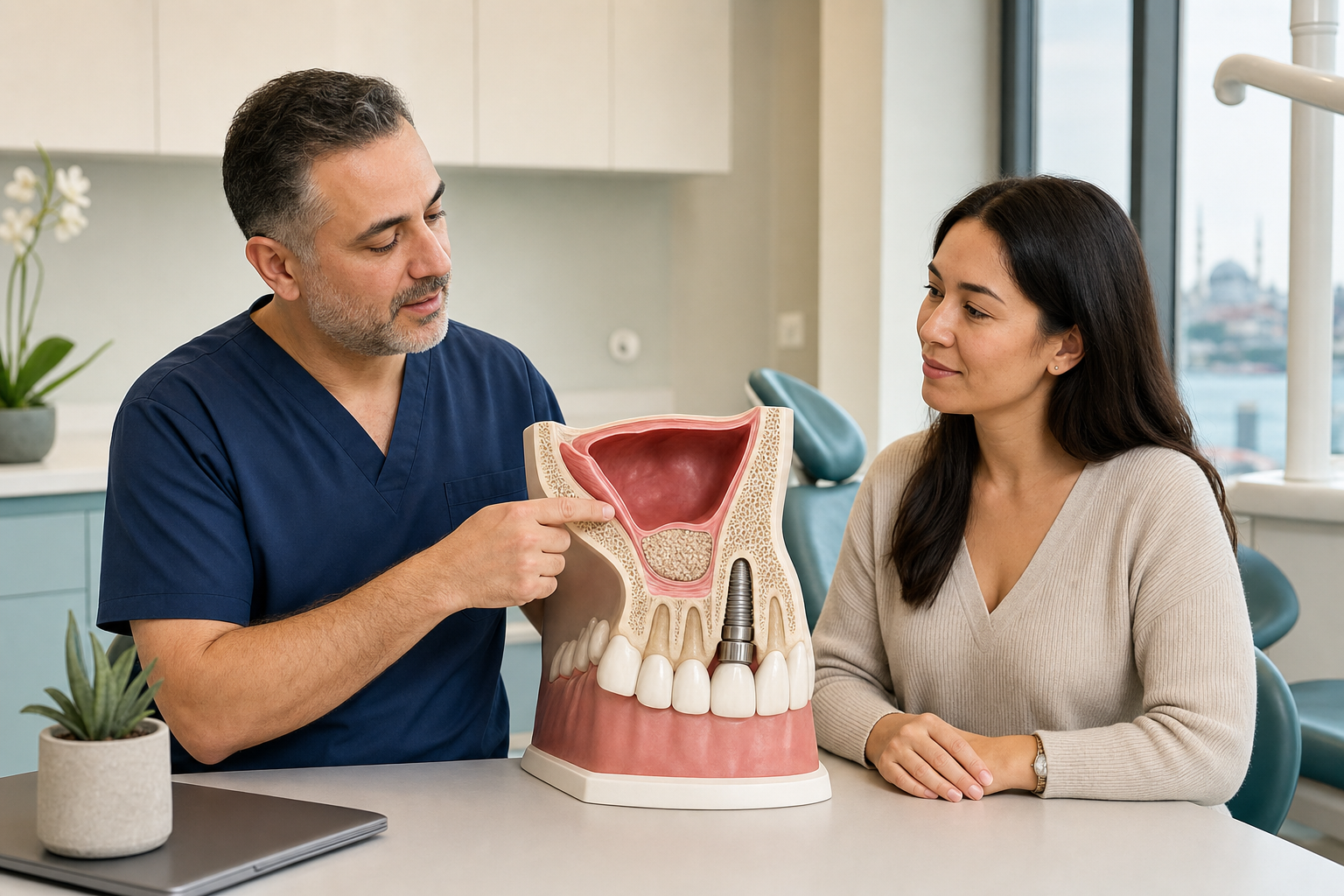
Clinical review required: Recovery instructions vary with lateral-window or transcrestal technique, membrane perforation, graft volume, simultaneous implant placement and the patient's sinus health. Follow the operating surgeon's written plan.
What is sinus lift recovery?
Sinus lift recovery is the period in which the gum incision closes, swelling settles and a graft placed beneath the maxillary sinus membrane becomes stable enough to mature. The operation increases bone height in the back of the upper jaw for implants. Comfort often returns in days, but graft remodelling takes months. Feeling well does not mean the graft is ready for chewing pressure or implant loading.
Lateral and transcrestal recovery
A lateral-window procedure reaches the sinus through the side of the upper jaw and commonly involves a larger graft. A transcrestal or internal lift works through the implant site and may create less swelling. These labels do not predict recovery by themselves. Membrane condition, number of sites, implant stability, anatomy and additional extraction or grafting all matter. Use the instructions given for the actual procedure rather than a generic online timetable.
The first 24 hours
Rest, keep the head elevated and protect the wound. Bite on gauze only as instructed. Do not rinse forcefully, spit repeatedly, use a straw or pull the cheek to inspect the incision. Choose cool or lukewarm soft foods and drink normally without suction. Protect numb lips and cheeks from biting and hot drinks. After sedation, follow the separate rules for escort, driving, alcohol, decisions and supervision.
Sinus-pressure precautions
Avoid blowing the nose and do not test the repair by pinching the nostrils and forcing air. If you must sneeze, keep the mouth open and avoid suppressing it, according to your surgeon's advice. Avoid forceful wind instruments, balloons, pressure-generating exercise and other activities that increase nasal pressure during the stated restriction period. The duration is procedure-specific; ask for a written end date rather than guessing.
Bleeding and nasal discharge
Minor oral oozing and a small amount of blood-tinged nasal drainage may occur early. Heavy oral bleeding, repeated bright-red nosebleeds, blood flowing into the throat, dizziness or bleeding that does not respond to instructed pressure needs prompt contact. Do not pack the nose or insert tissue, swabs or medication unless a clinician directs it.
Swelling, bruising and pain
Cheek swelling commonly increases over the first two or three days and then improves. Bruising can track beneath the eye or toward the jaw. Use wrapped cold packs if advised and take prescribed or permitted analgesics within personal safety limits. Pain that becomes stronger after initial improvement, rapidly expanding swelling, eye symptoms, fever, pus or difficulty swallowing or breathing is not routine recovery.
Medicines and nasal products
Take prescribed antibiotics, analgesics, steroid, saline or decongestant exactly as directed. Not every patient requires every medicine. Decongestants can be unsuitable with hypertension, heart rhythm problems, glaucoma, pregnancy or interacting drugs. Antibiotics do not correct a displaced graft, persistent communication or infected collection. Report rash, breathing difficulty, severe diarrhoea or other suspected adverse effects promptly.
Eating and chewing
Use a nutritious soft diet and chew away from the surgical side. Avoid hard crusts, nuts, seeds and sharp fragments that can press on the incision. Protein, fluids and normal balanced nutrition support healing; extreme detox or prolonged liquid diets do not improve graft maturation. If implants were placed at the same appointment, follow the loading restrictions for the provisional bridge or denture.
Oral hygiene
Keep the rest of the mouth clean. Begin gentle cleaning around the operated area when instructed, often with an ultrasoft brush after the earliest clot-protection period. A prescribed chlorhexidine rinse may temporarily support plaque control when brushing is limited, but can stain teeth and alter taste. Do not aim a powered irrigator beneath the flap, window or sutures before clearance.
Sutures and wound opening
Sutures may dissolve or require removal. Do not pull loose ends or repeatedly stretch the cheek. A tiny superficial gap differs from broad dehiscence with graft or membrane exposure. Contact the clinic if the incision opens, particles repeatedly escape, a membrane becomes visible or fluid passes between mouth and nose. Early assessment may preserve the graft.
Air, fluid or particles through the nose
A new sensation of air moving through the surgical site, liquid entering the nose while drinking, or graft particles appearing from a nostril requires prompt evaluation. These symptoms can suggest an oral-antral communication or membrane problem. Do not keep testing the pathway. Record when it began and whether it follows sneezing, nose blowing or trauma.
Sinusitis warning signs
Increasing one-sided facial pressure, foul taste or smell, persistent blocked nose, coloured nasal discharge, fever and pain that worsens after improving can indicate sinus inflammation or infection. A dental surgeon and, when needed, an ear, nose and throat clinician may coordinate care. Treating symptoms remotely without assessing the graft and sinus can delay appropriate drainage or repair.
Smoking, vaping and alcohol
Smoking reduces blood supply and increases wound and implant complications. Avoid cigarettes and vaping before and after surgery and request cessation support. Nicotine can still affect healing even without smoke. Alcohol may increase bleeding, dehydration and medicine interactions, especially with sedatives or opioid analgesics. Follow the surgeon's restriction rather than using comfort as the test.
Exercise, bending and lifting
Avoid strenuous activity while bleeding and swelling are active. Heavy lifting, breath-holding and intense exercise can increase pressure and throbbing. Return gradually after the clinician's stated interval. Contact sports require particular caution because a blow to the cheek or upper jaw can disturb an early graft.
Flying, diving and altitude
Cabin, underwater and rapid altitude pressure changes can be uncomfortable or risky while the sinus membrane heals. There is no single evidence-based waiting period for every operation. Ask the surgeon, especially after membrane perforation, sinus symptoms or a large lateral graft. Postpone travel if it prevents early review, and obtain a written contingency plan if treatment was abroad.
Dentures and temporary teeth
A removable denture pressing on the incision can open the wound and disturb graft stability. It may require relief, a soft liner or temporary non-use. Never adjust it at home. A fixed provisional restoration also needs a protected bite if implants are not intended for immediate loading. New rocking, pressure marks or pain should be checked.
Expected healing timeline
Soft-tissue closure usually progresses over the first weeks, while graft incorporation and remodelling continue for months. Timing for implant placement or loading depends on residual native bone, graft size, material, implant stability and health factors. Radiographic opacity is not the same as mature living bone. The decision combines symptoms, examination and appropriate imaging.
Follow-up and imaging
Attend early wound and suture reviews even if comfortable. Later radiographs or CBCT may assess sinus condition, graft volume and implant planning, but repeated scans should have a clinical reason. At implant placement or uncovering, the clinician also evaluates bone quality and stability. Keep the operative report, graft and membrane details, implant records and images.
When to seek urgent help
- Breathing or swallowing difficulty, rapidly spreading swelling or uncontrolled bleeding
- Vision change, eye swelling, severe headache or neurological symptoms
- High fever, pus or escalating one-sided sinus pain
- Air or liquid passing between the mouth and nose
- Large wound opening, membrane exposure or substantial graft loss
- Allergic reaction or serious medicine side effect
Treatment abroad
Before flying home, request the exact technique, membrane-perforation status, graft product and lot where available, implant details, medicines, imaging and emergency contact. Arrange an early local review. Clarify who will remove sutures and manage sinusitis, communication, exposed graft or an unstable provisional. Travel insurance and routine dental cover may exclude planned treatment complications.
Questions to ask your surgeon
- Was the sinus membrane intact and which technique was used?
- Were implants placed, and may the temporary teeth carry load?
- How long must I avoid nose blowing, flying, exercise and dentures?
- Which nasal symptoms are expected and which require review?
- When are sutures removed and when will imaging be repeated?
- Who should I contact outside clinic hours?
Frequently asked questions
Can I sneeze after a sinus lift?
Do not suppress a sneeze; many surgeons advise sneezing with the mouth open to reduce pressure. Follow the specific written instruction.
Are graft particles normal?
A few oral particles can sometimes occur, but repeated loss, nasal particles or wound opening needs review.
When can I fly?
Timing depends on technique, membrane integrity and symptoms. Obtain individual clearance rather than relying on a universal number of days.
When can the implant be used?
Only after stability and healing have been assessed. Comfort alone cannot confirm readiness for loading.
Sources and clinical review references
- Implant survival with different maxillary sinus floor-elevation techniques.
- Transcrestal versus lateral sinus-floor augmentation in limited residual bone.
- Management of Schneiderian membrane perforations in lateral augmentation.
- Sinus-membrane thickening and augmentation outcomes.
Editorial review note: Evidence reviewed 22 July 2026. Named clinician review is required before indexation.